The Journey of a Thousand Miles Begins with One Step

By Remez Sasson

Journey Begins With One StepThe title of this article is based on the words of Lao Tzu, who said, “The journey of a thousand miles begins with one step.”

This is true not just for a long journey, but also for short ones, and journeys, here are not meant to be actual journeys-trips. They refer to goals, tasks and actions. Everything that you do require that you take the first step.

Even drinking water from the tap requires that you walk to the kitchen to open the tap and fill a glass of water. If taking the first step is essential for such a simple act of filling a glass of water, it is of vital importance to achieving any goal.

If you wait for things to happen, probably nothing would happen. You have to take the initiative and do things.

[Read more...]

Are You Dreaming Big?

By Melissa McCreery, Ph.D.

So many people have wonderful dreams that are buried just beneath the surface – a book they’d love to write, a business venture they’d like to pursue, a race they’d like to sign up for, or a trip they want to take.

If only.

If only they had: more time, more motivation, more get-up-and-go. If only they weren’t so busy, or if only they had–more money, more connections, more support. If only they could get organized, or if only they could get some time to think. If only they could figure out the first steps.

Here’s what I know:

1. The bigger we allow ourselves to dream, the more we accomplish and the more we start to see what is possible.

2. We don’t have to be any more amazing than we already are to do amazing things.

3. We don’t have to know exactly how we are going to make our dream come true in order to start pursuing it. But we do need to HAVE the dream. We do need to have a clear intention that we’re going to do whatever-it-is and we do have to create space in our life for our dreams to emerge.

[Read more...]

The Magic Of Thinking Big

By Remez Sasson

Thinking big brings into your life bigger ideas, bigger plans and bigger success.

It s said that your thoughts create the circumstances and situations of your life. This means that if you think big you achieve big success, but if you think small, you will continue living the same life you are living now.

If you are able to think big you can make big changes in your life. Thinking big does not require more effort than thinking small. However, if you think big, sooner or later you will also have to make greater efforts, and be willing to make greater changes in your life. You will need to give up some habits and situations and be willing and ready to do so.

The magic of thinking big can change your life, but only if you back it with action. Just dreaming, staying passive and waiting is not enough. You need to keep your mind open to see opportunities and grasp them when they appear. You also need enough willpower, self-discipline, courage and motivation to follow your thoughts.

How many people have become successful and wealthy after watching “The secret” or reading the book? The movie and book inspired many people, but feeling inspired is not enough. Inspiration passes away after a little time. You need constant inspiration and motivation, which means a strong desire to achieve your goals, but how many people have a really strong desire?

Most people have dreams of better and successful life, but they don’t believe that can attain this life, and therefore sabotage any positive thoughts they might have.

The magic of thinking big can transform your life, but you also need faith that you can succeed and adopt a positive attitude and positive action.

Think little goals and expect little achievements. Think big goals and win big success.
- David. J. Schwartz, Ph.D.

As long as you are going to be thinking anyway, think big.
- Donald Trump

Whatever the mind of man can conceive and believe, it can achieve.
– Napoleon Hill

Learn how to use the magic of thinking big – Read Visualize and Achieve.

Do You Make New Year Resolutions?

By Remez Sasson

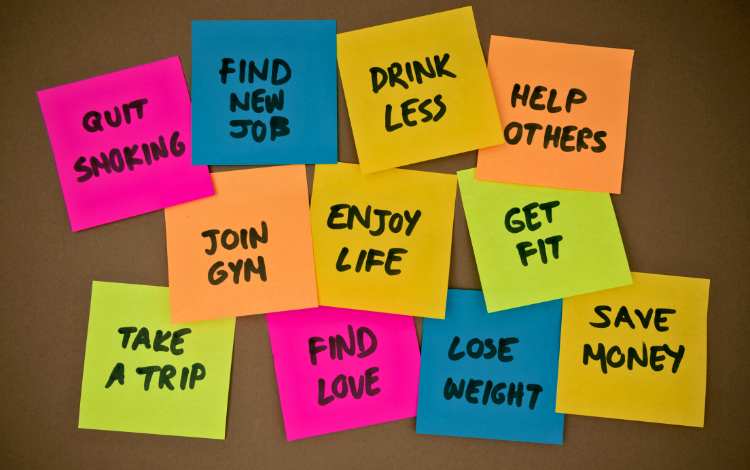
Making ResolutionsDo you make New Year resolutions?

Does the beginning of a new year make you think about your life, what you have accomplished in the last year, and what you wish to do next year?

Do you feel the urge to make resolutions?

The urge to make resolutions arises also at other times, not only at the New Year, in response to certain situations or events. You may watch a movie or read a book that has a strong impact on you, and this makes you want to make changes in your life, or awaken the desire to achieve a certain goal. At these times people make resolutions, and then begin enthusiastically and with great emotions doing something about them.

The problem is that after a while the emotions calm down, enthusiasm wanes away, and they quit what they have started.

We often make resolutions and promises to act in a certain way, improve our habits or our life, behave in a particular way, study, look for a new job or a partner and so on, and we might even start acting according to our resolutions, but this goes on only for a short while. We start with much noise, but end in silence. We make resolutions enthusiastically and optimistically, but then we lose our enthusiasm and stop doing what we promised ourselves to do.

Why does this happen?

- Most resolutions are triggered by emotions and not by common sense and reason, and when it comes to action, we often find out that they are too big, require too much work, or that we do not really care about them.

- We often expect immediate results and we don’t get them we quit.

- A resolution made on the spur of the moment, triggered by emotion is often short-lived.

- Subconscious habits are strong, standing in the way of fulfilling resolutions, especially when the resolution requires change of habits.

So what should you do?

- You first need to be sure that making this resolution is good for you.

- Use your common sense and be a little detachment, and then ask yourself whether you really want to follow and fulfill this resolution.

- Start with simple resolutions, and when you can accomplish them move to greater resolutions.

- Write down your resolutions and read them every day.

- You need some willpower and self-discipline to carry out resolutions, as well as visualization and affirmations.

You can make resolutions on the eve of the New Year, and you can make resolutions at any other times.

The Importance of a Definite Goal

By Remez Sasson

One of the primary obstacles to success is the lack of a definite aim – knowing what you want to achieve or attain. The lack of a definite aim results in either doing nothing, or starting one thing and then quitting and starting something else. This kind of behavior doesn’t lead to success. You can achieve more and better results when you define your goal, big or small, and work toward achieving it.

You cannot get anywhere, if you don’t know what you want. Many start in one direction without much thinking, but after some time realize that they don’t really want what they have been pursuing, and switch to something else. If you don’t know exactly what you want, you cannot attract it into your life.

One focused on a definite goal is like a person who sees his destination at the end of the road, and walks straight toward it, while one without a definite goal doesn’t know in which direction to go, and either stands still in one spot, or keep changing directions, and consequently wasting time and energy and getting nowhere.

Aiming at a definite goal is like focusing the lenses of a binocular or a microscope. You need to focus the lenses in order to see clearly, because otherwise you will see a blurred image. It is the same with visualization; you need to focus on a clear aim in order to attract it into your life.

It is usually not so simple to define goals, and most people don’t really know what they want. You need a clear and detailed mental picture in order to focus and direct your mental energy toward the realization of your goal. To do this, you need to know exactly what you want, and not behave like a blindfolded person standing at a crossroads not knowing which direction to take. Only when you know both the destination and the direction you can proceed in the shortest and most direct way.

Excerpt from Visualize and Achieve, the book about creative visualization.