
Self-discipline is an important trait. Many people struggle with self-discipline, and it can often feel like an elusive skill. But having the proper habits can help you build your self-discipline, so read on for some helpful tips on how to improve your self-discipline.
Self-discipline is a universal skill that everyone needs in order to carry out daily activities and meet more complex goals throughout one’s life.
We all know what it feels like to lack self-discipline: we wait until the last minute, procrastinate, or give ourselves a hard time by saying “yes” to everything just so we don’t have to make a choice, etc.
Discipline Is the Art of Choosing
“Discipline is choosing what you want most over what you want now.”
Let’s be honest. You probably already know that self-discipline matters.
You’ve heard it a hundred times from parents, teachers, TikTokers, or YouTube productivity gurus.
But knowing it and doing it are two very different things.
Download this free 3-step guide and start building focus and inner calm in just 5 minutes a day.
**Get the Free Guide**
Because when you’re staring at an empty Google Doc, a messy room, or a list of things you keep putting off… It’s not “motivation” you’re lacking—it’s a system that works for you.
Good news: That’s what you’ll learn here.
You don’t need to become a robot.
You don’t need to wake up at 5 a.m. or hustle 24/7.
What you need are a few smart tools, some mindset shifts, and a strategy that fits your life.
Habits to Improve Your Self-Discipline
Self-discipline is an essential component of personal growth and success, and cultivating habits that support it can be a powerful way to enhance your ability to achieve your goals.
Here are a few habits you can adopt to improve your self-discipline:
Do You Start Things but Struggle to Finish Them?
Motivation comes and goes — but discipline stays. Learn practical techniques to strengthen your willpower and self-discipline, beat procrastination, and follow through on your goals.
Discover the Book →1. Build up Your Willpower Muscles
Willpower is like any other muscle in your body – if you don’t use it, then it will atrophy.
The same goes for your self-discipline: if you don’t use it, it will wane.
Therefore, the best way to build up your self-discipline is by practicing self-discipline in various areas of your life. This will make it more familiar to you and help you build up a strong foundation.
One way to practice self-discipline is to do things that require willpower and self-control. By using your self-discipline muscle on a regular basis, you build muscle-memory.
For example, try to avoid going to your favorite sweets shop on the way to work. When you add a routine to your self-discipline practice, it will help you to increase its effectiveness.
2. Exercise Helps Self-Discipline
Exercising regularly can help boost your willpower by making you feel more awake and focused.
Studies have found that people who exercise regularly have better impulse control and are less prone to impulsive behavior.
This is because exercise can increase levels of certain hormones in the body such as serotonin which improve impulse control and mood.
Exercising regularly helps you stay motivated, focused, and positive. This can be particularly helpful for improving self-discipline because it can also help you gain clarity about your priorities.
3. Learn to Say No
One of the best ways to improve your self-discipline is to practice saying “No” to people and things that currently take up your time.
This may sound scary to start with, but it can be done in a polite way.
When you start to practice saying NO to some of the things and people that currently take up your time, you will gain a better perspective on what your priorities are in life. This would also make you aware of the time you spend on each task and activity.
One good way to start practicing saying no is to not accept every invitation that are currently on your calendar. You can also start to say NO to salespeople who are trying to sell you something that you don’t need.
Willpower and self-discipline grow with training.
Here are simple methods to strengthen them each day.
4. Wait Before Responding on Social Media
Many of us have the tendency to jump in and respond to emails, Facebook messages and other social media posts as soon as we see them.
Responding to these messages immediately can feel like a quick way to get things done. However, in reality, it can distract you from the task at hand. It will also come across as inconsiderate to the sender if you don’t have time to reply thoughtfully.
When you are in the middle of a task or project and you get a message from someone, try to wait before you respond. This will help you gain more control over your environment, better manage your time, and more clearly identify what you want to accomplish.
You gain better control of your time when you wait before responding on social media.
Related: Can You Live One Day Without Your Smartphone?
5. Write Down Your Goals so You Can See Them Every Day
Having a goal that you can see every day can help boost your self-discipline. In this way, you remind yourself of your goal and make it more memorable. It will stay with you as a constant reminder, helping you to stay motivated and on track.
This can create a powerful self-discipline cycle where you remind yourself of your goal, have motivation boost, and then work towards achieving your goal.
6. Set Small Goals
Setting small goals for yourself can help you break down the big goals into smaller and more manageable steps, making them easier to achieve.
Setting small goals can help you with self-discipline. It is easier and looks less intimidating to work on small goals rather than on big goal. This requires less discipline and staying power, and therefore, you can accomplish the goal faster.
This would boost your belief and yourself, and enable to display greater disciple.
Setting short-term goals can also help you stay motivated when you don’t feel like you have the energy to tackle much bigger goals.
Small goals make it easier to practice delf-discipline, because you see your goal as achievable and within reach, not as something too big and intimidating.
“The ability to discipline yourself to delay gratification in the short term in order to enjoy greater rewards in the long term is the indispensable prerequisite for success.”
– Maxwell Maltz
You might like reading self-discipline quotes.
7. Know Your Weaknesses
Here is another habit that can improve your self-discipline. This consists of knowing what your weaknesses are, and then starting working on developing the opposite habits.
If you don’t know what your weaknesses are, then you won’t know what goals to set to improve them.
Your weaknesses can be used as stepping stones towards your goals as they are areas that you are more likely to procrastinate.
Identify your weaknesses, such as procrastination, the inability to say no, or being too passive. These, and other weakness you identify, can be your target of improvement. This process strengthens you, and make you work your discipline and willpower muscles.
Two Tips For You
1. Start with Micro-Wins, Not Overhauls
Discipline is not a personality trait; it’s a muscle. Just like going to the gym, you don’t start with a 200lb deadlift. You start with what you can do consistently.
Examples:
- Write 1 page a day, not dozens.
- Study for 15 minutes.
- Meditate for 10 minutes.
- Clean 1 square foot of your room.
Small wins build identity:
“I’m the kind of person who follows through.”
That’s how you become unstoppable.
2. Learn to “Discipline” Your Attention First
Your attention is under attack in a world of 5-second videos and endless pings.
If you can train your mind to focus, everything else becomes easier.
Try this:
- Set a 15-minute timer and do only one thing.
- No music, no tabs, no multitasking.
- When you lose focus, gently return.
You’re not just building discipline; you’re reclaiming control of your mind.
Questions You Might Ask
Q: I’ve failed so many times. Can I really change?
A: Yes. You’re not broken—you just need a better system. One that fits your life, not someone else’s.
Q: What if I don’t feel motivated at all?
A: Perfect. Motivation often comes after action, not before it. Do the tiniest version of the thing and let momentum carry you.
Q: Can I still have fun and be chill if I’m disciplined?
A: Definitely. Discipline doesn’t kill freedom—it creates it. You’ll have more time, more energy, and way less guilt.
Final Words
Self-discipline is an important trait, but it can feel like an elusive skill to master. These seven habits can help you start building your self-discipline.
Exercising regularly these habits can be a good start to help you boost willpower and self-discipline.
We hope that you find useful these habits to improve your self-discipline.
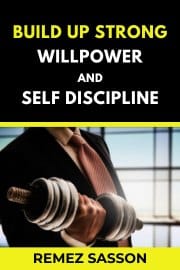
For in-depth advice and exercises to boost your willpower and self-discipline we recommend reading and practicing our book on this topic, Build Up Strong Willpower and Self Discipline.
Do You Start Things but Struggle to Finish Them?
Motivation comes and goes — but discipline stays. Learn practical techniques to strengthen your willpower and self-discipline, beat procrastination, and follow through on your goals.
Discover the Book →Refined and updated with practical wisdom for 2026 by Remez Sasson.
If you find this content helpful, we would truly appreciate it if you mention or link to SuccessConsciousness.com.
About the Author
 Remez Sasson is the founder of SuccessConsciousness.com, a global resource established in 2001. With decades of personal experience and 25 years of professional digital publishing he has written many articles, and created 11 eBooks, and 16 digital courses. His teachings have helped readers worldwide cultivate inner peace, self-mastery, and inner strength, empowering them to effectively shape their lives.