

The Paradox of Connection and Clinging
We are often taught that “true love” means total enmeshment. We have been conditioned to believe that if you love someone, you must feel their pain, absorb their stress, and validate your own worth through their approval.
This is not connection; It is attachment; it is clinging and clinging is the root of relationship anxiety.
When we lack emotional detachment, we become like a dry leaf caught in a windstorm. If your partner has a bad day, you have a bad day. If they critique you, your self-esteem crumbles. If they pull away, you panic.
This state of high reactivity is exhausting. It leads to burnout, resentment, and the very conflicts we are trying to avoid.
True healthy emotional detachment is the powerful act of establishing a sovereign, calm inner world while still fully participating in your relationship. It is the ability to say, “I care deeply about you, but my peace of mind is not conditional on your emotional state.”
Emotional Detachment vs. Clinging: A Practical Guide
Understanding the difference between healthy detachment and “pulling away” (indifference) is essential. Indifference builds walls; detachment builds healthy fences.
| The Emotional Clinger (The Attached State) | The Detached Lover (The Healthy State) |
| Reactionary: Instantly absorbs the partner’s anger or sadness. | Observational: Acknowledges the partner’s mood without absorbing it. |
| Tries to “Fix”: Feels responsible for curing their partner’s unhappiness. | Holds Space: Offers support but allows their partner to “own” their process. |
| Personalizes: Takes every mood, comment, or action as a reflection of their worth. | Understands Perspective: Knows that their partner’s reactions are usually about their own inner state. |
| Fear-Based: Acts out of fear of loss, disapproval, or abandonment. | Love-Based: Acts from a place of security, knowing their own value. |
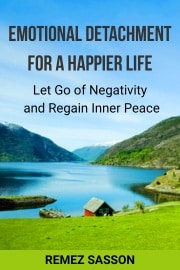
Transitioning from a ‘Clinger’ to a ‘Detached Lover’ requires a shift in your mental programming. For a deep dive into the specific techniques that make this shift permanent, check out Emotional Detachment for a Happier Life.
Why Detachment is the Ultimate Act of Love
It sounds counterintuitive, but learning how to detach can actually save and strengthen your relationships.
1. It Ends the “Fixer” and “Venting” Cycle
When your partner vents to you, they are rarely asking you to solve their problem (or become their therapist). They are looking for presence.
When you are detached, you can sit with their pain without jumping in to “fix” it. This makes your partner feel seen, heard, and respected, which builds trust.
2. It Creates a Safe Space for Authenticity
A relationship without detachment is a performance. We censor ourselves to manage the other person’s emotions.
Detachment creates an environment where both of you are free to be your imperfect, complex selves without fearing that your individuality will cause the whole relationship structure to collapse.
3. It Stops “Taking Things Personally”
This is the single greatest gift of detachment. When you realize that your partner’s stress, sharp words, or distant mood are almost always about their internal dialogue (not your worth), you stop reacting defensively. This allows you to meet conflict with curiosity (“What’s going on with you?”) rather than accusations.
If you find it nearly impossible to stay calm when a loved one is angry or critical, you may need a structured approach. The book Emotional Detachment for a Happier Life offers a clear path to developing an “Inner Fortress” of peace that no one can disturb.
How to Practice Healthy Detachment (4 Practical Steps)
Healthy detachment is a mental muscle that you must train. It does not happen overnight. Here are four steps you can take today to build it:
1. Use the “Buffer of Time”
When you feel a reactive emotion (fear, anger, defensiveness) triggered by your partner, implement a “5-Second Rule.”
Inhale slowly before you speak. Use that brief pause to ask yourself: “Am I reacting to what they are actually saying, or am I reacting to a fear about what it means?” This small pause allows the prefrontal cortex (the rational brain) to take over from the amygdala (the emotional brain).
2. The “It’s About Them, Not Me” Mantra
When your partner is moody, critical, or distant, practice this internal phrase. Do not say it aloud (it sounds dismissive). Say it silently to yourself: “This feeling belongs to them. It is not about me.” Visualize their emotion as a package they are holding. You do not have to sign for it.
3. Define Your “Emotional MOAT”
Imagine a physical moat around your inner peace. Love, respect, and support can cross the drawbridge. But their anxiety, their need for control, and their internal chaos must stay on the other side.
This is not about being cold; it is about self-preservation so that you can continue to be a loving partner.
4. Build Your OWN Core of Happiness
A key driver of unhealthy attachment is looking to your partner to be your sole source of happiness, validation, and purpose.
Focus on strengthening your own “Core of Happiness.” Re-invest in your hobbies, friendships, career, and personal growth. When you are not dependent on your relationship to make you happy, you gain the natural security that makes detachment possible.
The Line Between Healthy Detachment and Emotional Abuse
A final, vital distinction must be made. Healthy detachment is a tool for personal peace. It is NOT a weapon to be used against your partner.
- Healthy Detachment: “I am calm and present with you, but I will not allow your chaos to destroy my peace.”
- Emotional Stone-walling (Abusive): “I don’t care about your feelings, and I’m ignoring you until you act the way I want.”
True detachment is rooted in respect—respect for your partner’s sovereignty, and respect for your own mental health.
It is the wisdom to know that the best way to love someone is to remain a stable, grounded force they can rely on, rather than becoming just another person caught in their storm.
Are you ready to build a life of unbreakable inner peace?
Final Thoughts: The Path to Inner Freedom
Healthy detachment is the ultimate act of self-love and relationship wisdom. By protecting your peace, you become a better partner, a better friend, and a more centered individual.
Ready to master this skill?
- Go Deeper: To explore the full philosophy and techniques of letting go, visit our comprehensive guide: Emotional Detachment: Inner Freedom Through Letting Go.
- Take Action Today: You don’t have to do it alone. Start your transformation with the step-by-step practical exercises found in the book Emotional Detachment for a Happier Life.
Want more peace and fewer emotional reactions?
This method helps you stay calm and steady.
Refined and updated with practical wisdom for 2026 by Remez Sasson.
About the Author - Remez Sasson
 Founder of SuccessConsciousness.com, Remez Sasson has spent decades studying, practicing, and teaching inner development, meditation, focus, and conscious living. Through articles, books, courses, and ongoing weekly lessons, he offers practical guidance or cultivating inner calm, greater awareness in everyday life, and ways to improve one's life.