
How to Overcome Common Meditation Obstacles
Almost everyone encounters difficulties, distractions, and a wandering mind when starting a meditation practice. Because the mind is inherently restless, learning to focus takes patience and training.
Common obstacles like nonstop thinking, worries, noise, and short attention spans can easily pull your focus away.
However, with simple, targeted techniques, you can learn to quiet mental noise and deepen your practice. Below is a quick overview of the most effective strategies to improve your sessions.
Key Takeaways
- Start Small: Beginners should begin with 5 to 10 minutes daily to build a consistent habit without feeling overwhelmed.
- Prioritize Frequency: A short daily practice builds focus much more effectively than occasional long sessions.
- Create a Dedicated Space: Meditate in a quiet, comfortable spot to minimize sensory distractions.
- Anchor to Your Breath: Use simple breath awareness to ground your attention whenever your mind wanders.
- Observe Without Judgment: Gently acknowledge distracting thoughts without frustration and return to your anchor.
How to Improve the Quality of Your Meditation
in this article, you will find a few tips to help you improve your meditation. If you have been learning to meditate, I am sure you are already familiar with these tips, but it is always a good idea to repeat them.
Read the tips, memorize them, and practice them/
1. Make Peace with Your Mind
Start by telling your mind you will attend to its thoughts after you finish the meditation session.
Download this free 3-step guide and start building focus and inner calm in just 5 minutes a day.
**Get the Free Guide**
After sitting down to meditate, and just before you begin, tell yourself that all thoughts and all problems will have to wait until you finish meditating. Repeat these words firmly several times, so that you remember them when thoughts start to disturb your meditation.
Tell your mind that no matter how important any thought might seem, it has to wait until you finish your meditation. This will help you stay calm and ignore the thoughts that might pop up in your mind during mediation.
2. Avoid Anything that Might Distract Your Attention
Minimize distractions before you begin to meditate.
When you meditate, you would most probably encounter many interruptions and distractions. Here are a few things you can do to avoid them:
- Meditate in a place, where you are alone and undisturbed.
- Close the windows and doors of your room to avoid noise.
- Take the phone off the hook and switch off your smartphone.
- Turn off the TV and the radio.
- Turn off your computer.

Is Your Mind Constantly Filled with Thoughts?
Tired of the endless mental noise? Learn proven techniques to quiet the chatter, regain control of your thoughts, and live with calm and clarity.
Discover the Book →3. Try to Meditate at the Same Time of the Day
Create the habit of meditating at the same time each day.
If you meditate every day at the same hour, it will soon become easier to meditate. The mind will automatically remember to meditate at the same hour, and you will experience less mental resistance.
Early mornings or early evenings are good times for meditation, but you can choose any other convenient hour.
4. Meditate at the Same Place
Create the habit of meditating at the same place.
Try to arrange a quiet place for meditation. It could be a special room, a corner in a room, your office, or in a garden.
It would be a good idea to meditate in the same place, since this will make your mind associate meditation with a certain place, making it easier to meditate when you are there.
5. Don’t Eat before Meditating
Never sit to meditate after a meal.
One short story, insights, guidance, one simple exercise, delivered weekly. It takes about 10-15 minutes and shifts how you see everything.
**READ A FREE LESSON**
After eating, the energies of the body are directed toward the digestive process, at the expense of the mental process. This is why there is a feeling drowsiness after eating a heavy meal.
Please note that hunger is also an obstacle, which can disturb your concentration. If you are too hungry, you may eat a fruit, a slice of bread, or drink a glass of water or juice a little while before sitting down to meditate.
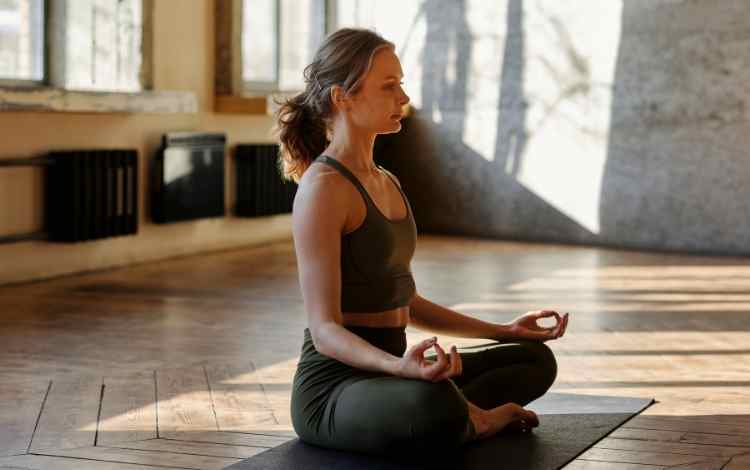
6. Sit Comfortably Holding Your Back Straight
A comfortable sitting position is important.
Sitting in a comfortable posture is important. This helps you to avoid tensing your mind and your body.
It is important to be comfortable so that your mind is free to concentrate.
You may sit on the floor, if you find it comfortable, or you may choose to sit on a chair. Do what is more comfortable and less strenuous for your body.
7. Relax Your Body
The mind focuses better when the body is relaxed.
There is often, a tendency to tense the body when meditating, focusing, or doing any mental work. You need to avoid this habit.
Unnecessary physical tension tires the body and the mind, and does not allow you to focus your attention. This of course, stands in your way to meditate successfully.
You need to learn to relax your body. You can find various appropriate relaxation techniques by searching for them on the Internet.
A useful tip:
Every time you feel that you are your tensing your body, stop what you are doing and relax it to undo the tension. This does not take more than a few moments.
8. Do not Feel Frustrated if Your Mind Gets Distracted
Avoid the feeling of frustration when facing obstacles.
No matter how many times your mind wanders away during meditation, just bring it back calmly to the meditation.
You might repeatedly forget your meditation and think about other matters. That’s natural for an untrained mind. Do not get frustrated or angry at your mind. Keep calm and continue.
9. Keep a Positive Attitude
Positive thinking is the correct attitude.
A positive attitude will take you past difficulties, disturbances and obstacles. Keeping a positive attitude will help you stay calm and poised, and help you improve your meditation.
Join The Path to Awakening — A practical online meditation course that guides you step by step to inner peace, heightened awareness, and awakening beyond daily distractions.
👉Explore The Online Meditation Course
How Long Should You Meditate as a Beginner?
Starting small is the most effective way to build a lasting meditation practice. For beginners, five to ten minutes per day is the sweet spot.
When you are just getting started, the main goal isn’t to reach deep states of contemplation or quiet your mind for extended periods—it’s to train your brain to sit still and establish a reliable daily routine.
Pushing yourself into 20- or 30-minute sessions too soon often leads to restlessness, frustration, and eventual burnout. By keeping your initial sessions brief and manageable, you eliminate the mental friction of getting started and make it far easier to stay consistent.
Once a daily 5-to-10-minute session feels comfortable and natural, you can gradually extend your time. Adding just two to three minutes each week allows your focus to expand without overwhelming your mind.
The key is prioritizing frequency over duration: a brief five-minute sit practiced every single day yields far greater benefits for mental clarity and stress relief than a single 45-minute session once a week.
Aim to find a steady rhythm that fits comfortably into your daily schedule, letting your practice grow organically as your concentration strengthens.
Frequently Asked Questions About Improving Meditation
1. How can I stop my mind from wandering during meditation?
Mind-wandering is completely natural, especially when starting out. Instead of fighting your thoughts or trying to force your mind to go blank, simply observe the thought without judgment, let it pass, and gently redirect your focus back to your anchor, such as your breath or a chosen point of focus.
2. What is the best environment for a successful meditation practice?
The ideal environment is a quiet, comfortable space where you are unlikely to be disturbed or distracted by loud noises, scents, or physical interruptions. Designating the same comfortable spot for your daily sit helps signal to your brain that it is time to relax and focus.
3. Is it better to meditate daily for a short time or once a week for longer?
Daily consistency is far more effective than long, sporadic sessions. Practicing for just 5 to 10 minutes every day helps train your brain and build a sustainable habit much faster than sitting for 45 minutes once a week.
4. What should I do if worries and anxieties interrupt my meditation?
When worries, fears, or daily plans enter your mind, acknowledge them as temporary thoughts rather than engaging with them or allowing them to trigger an emotional response. Briefly note the thought, remind yourself that you can address daily concerns after your session, and return your attention to your breathing.
Finding Your Rhythm
Ultimately, the best meditation routine is the one you can sustain consistently. As a beginner, focusing on small, daily sessions helps you train your attention without feeling overwhelmed or discouraged.
As your practice becomes a natural part of your day, you can gradually increase your duration at your own pace. Remember that progress in meditation is measured by commitment and patience, not by how many minutes you sit.
Learn how to calm your mind and improve your meditation – Read our book Calm Down the Nonstop Chatter of Your Mind.
Is Your Mind Constantly Filled with Thoughts?
Tired of the endless mental noise? Learn proven techniques to quiet the chatter, regain control of your thoughts, and live with calm and clarity.
Discover the Book →Refined and updated with practical wisdom for 2026 by Remez Sasson.
If you find this content helpful, we would truly appreciate it if you mention or link to SuccessConsciousness.com.
About the Author
 Remez Sasson is the founder of SuccessConsciousness.com, a global resource established in 2001. With decades of personal experience and 25 years of professional digital publishing he has written many articles, and created 11 eBooks, and 16 digital courses. His teachings have helped readers worldwide cultivate inner peace, self-mastery, and inner strength, empowering them to effectively shape their lives.