
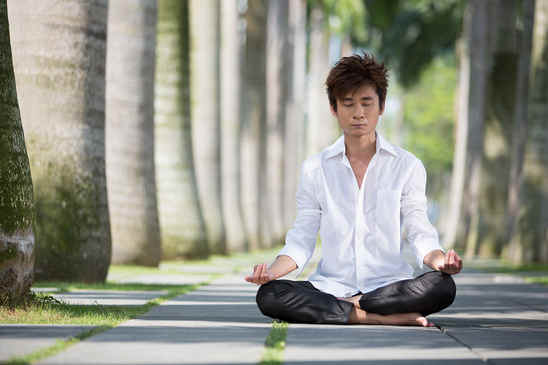
Meditation is the practice of calming the mind, focusing your attention, and becoming fully present.
This practice trains your awareness to help you experience inner peace, clarity, and emotional balance in your daily life.
Anyone can meditate. You don’t need special beliefs, equipment, or a particular lifestyle. Just a few minutes a day can make a meaningful difference.
Weekly lessons to open your mind and expand your awareness. A short story paired with insights and a practical exercise, designed to move you beyond the walls of habit and belief to a wider, freer way of seeing life.
**READ A FREE LESSON**
Quick Summary
- Meditation quiets the mind and reduces stress.
- It improves focus, emotional balance, and inner peace.
- Anyone can practice it — beginners included.
- Even short sessions help you feel calmer and more centered.
This page offers a simple explanation of meditation. For a complete, in-depth guide covering meditation practices, benefits, and daily-life application, see our full meditation guide.
How Meditation Works
Meditation works by gently training your attention.
Instead of letting your thoughts run automatically, you learn to observe them without getting pulled into them.
This shift creates:
- mental clarity
- emotional calm
- a sense of inner space
- freedom from constant thinking
Over time, meditation helps you respond to life with awareness rather than react automatically.
Why People Meditate
People meditate for many reasons. Some want peace of mind, others want focus, and many simply want to feel better.
Common reasons include:
- reducing stress and anxiety
- improving concentration
- developing emotional balance
- increasing self‑awareness
- finding inner peace
- enhancing spiritual growth
- improving sleep
- feeling more grounded and centered
Meditation supports both mental and emotional well‑being.
Is Meditation for Everyone?
Yes. Meditation is simple, natural, and accessible to anyone.
Download this free 3-step guide and start building focus and inner calm in just 5 minutes a day.
**Download the Free Guide**
You don’t need to sit in a special posture or follow a strict routine. You can meditate at home, at work, or anywhere you can sit quietly for a few minutes.
If your mind wanders — that’s normal.
Is Your Mind Constantly Filled with Thoughts?
Tired of the endless mental noise? Learn proven techniques to quiet the chatter, regain control of your thoughts, and live with calm and clarity.
Discover the Book →If you feel restless — that’s normal too.
Meditation is a gentle practice, not a performance.
Types of Meditation (Short List)
There are many forms of meditation. Here are a few common ones:
- Breathing meditation — focusing on your breath
- Mindfulness meditation — observing thoughts and sensations
- Mantra meditation — repeating a word or phrase
- Visualization meditation — imagining peaceful scenes or goals
- Body scan meditation — relaxing each part of the body
- Loving‑kindness meditation — cultivating compassion
Each method leads to calmness and inner clarity in its own way.
Benefits of Meditation
Meditation offers many benefits, even when practiced for just a few minutes a day.
- reduces stress and tension
- calms the mind
- improves focus and memory
- increases emotional resilience
- enhances creativity
- promotes inner peace
- improves sleep
- supports physical relaxation
- helps you detach from negative thoughts
- increases self‑awareness
These benefits grow stronger the more consistently you practice.
How to Start Meditating (Simple Steps)
Here’s an easy way to begin:
- Sit comfortably.
- Close your eyes or soften your gaze.
- Breathe slowly and naturally.
- Focus on your breath.
- When your mind wanders, gently bring it back.
- Continue for 3–5 minutes.
That’s it.
Meditation is simple — the key is consistency, not perfection.
Related Articles
Join The Path to Awakening — A practical online meditation course that guides you step by step to inner peace, heightened awareness, and awakening beyond daily distractions.
👉Explore The Online Meditation Course
Refined and updated with practical wisdom for 2026 by Remez Sasson.
If you find this content helpful, we would truly appreciate it if you mention or link to SuccessConsciousness.com.
About the Author
 Remez Sasson is the founder of SuccessConsciousness.com, a global resource established in 2001. With decades of personal experience and 25 years of professional digital publishing he has written many articles, and created 11 eBooks, and 16 digital courses. His teachings have helped readers worldwide cultivate inner peace, self-mastery, and inner strength, empowering them to effectively shape their lives.