
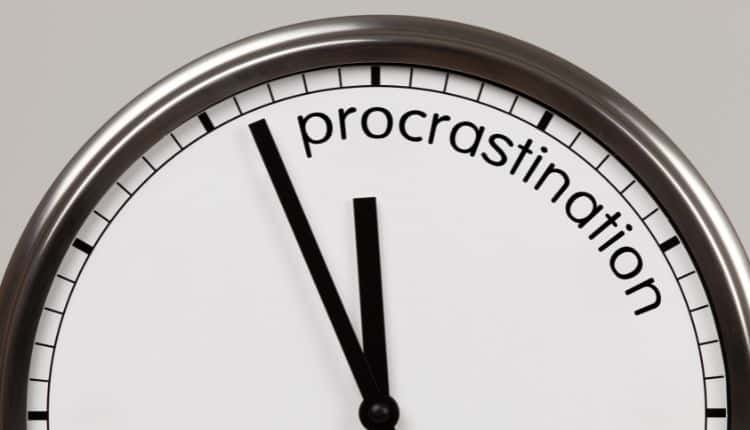
Rebecca had written the client’s name on three separate sticky notes over the past two weeks. Call Mr. Halden. Each note ended up under a stack of papers, then a coffee mug, then, eventually, in the trash with the rest of the desk clutter, unread and untouched.
She told herself every morning that it wasn’t a difficult call. It was just a conversation about a contract that needed to be renegotiated, numbers that needed to be said out loud instead of typed into an email. She had made harder calls than this one without a second thought.
And yet, every day she found something more urgent. Her inbox needed clearing first. The report needed one more pass. The plant on her windowsill, which had survived two years of complete neglect, suddenly needed repotting at eleven in the morning on a Tuesday.
Weekly lessons to open your mind and expand your awareness. A short story paired with insights and a practical exercise, designed to move you beyond the walls of habit and belief to a wider, freer way of seeing life.
**READ A FREE LESSON**
Rebecca noticed herself avoiding this task. She saw her own hands reach for anything, anything at all, that wasn’t the phone.
By Thursday, the deadline was tomorrow. She sat at her kitchen table that evening with the contract open in front of her and her phone face down beside it, and for the first time in two weeks, she stopped moving.
She stopped reaching for the next small task to hide behind. She just sat there, in the quiet, with the thing she’d been avoiding finally the only thing left in the room.
And she asked herself, plainly, for the first time, why. Not why she hadn’t called yet. She knew that answer; it was on every sticky note. Why she couldn’t. What was actually happening in her mind when she pictured picking up the phone and dialing his number.
She just could not bring herself to focus on the issue and solve it.
The Answer Rebecca Found
The answer arrived slower than she expected, and smaller. It wasn’t about the numbers, the negotiation, or even Mr. Halden, whom she barely knew. It was about past mental programming.
She thought of her father, oddly, a man who had never once told her an idea of hers was good without also telling her three ways it could be better. She subconsciously expected criticism and being told “NO”.
She hadn’t thought about that in years. She hadn’t connected it to anything, certainly not to a business call. But there it was, sitting quietly underneath two weeks of sticky notes and repotted plants, waiting to be noticed.
The moment this thought and insight rose into her awareness, she knew why she procrastinated, and she knew what she had to do.
Rebecca called Mr. Halden that night, ten minutes before the office would have closed anyway. The conversation lasted six minutes. He agreed to most of what she asked. It was, in the end, almost nothing.
Download this free 3-step guide and start building focus and inner calm in just 5 minutes a day.
**Download the Free Guide**
But she sat with the phone in her hand afterward for a long moment, not because the call had been hard, but because she finally understood that it had never really been about the call at all.
👉Learn how to: Break Free from Procrastination and Take Control of Your Life.
What This Story Is Really About
Procrastination gets treated as a scheduling problem. Just block out the time, people say. Just start with the smallest step. Sometimes that works. Often it doesn’t, and the reason it doesn’t is that the delay was never really about time management in the first place.
Underneath most persistent procrastination is a feeling the task stirs up, one the mind would rather not sit with. Fear of doing it badly. Fear of conflict. Fear of finding out something you’d rather not know yet.
The task itself becomes tangled up with that feeling, and avoiding the task becomes, without your quite realizing it, a way of avoiding the feeling.
This is why willpower advice so often fails against real procrastination unless you have consciously developed the willpower skill. You cannot outmuscle a feeling you haven’t identified. You can only outrun it for a while, from one sticky note to the next, until the deadline finally corners you.
👉Learn how to: Break Free from Procrastination and Take Control of Your Life.
Four Ways to Find What You’re Actually Avoiding
1. Ask what the task represents, not what it requires.
Rebecca’s call required six minutes and a phone. What it represented was something else entirely. When you notice yourself avoiding something, ask what completing it would mean, not just what doing it would take.
2. Watch what you replace it with.
The task you reach for instead of the one you’re avoiding is rarely random. A sudden urge to clean, organize, or handle something minor is often the mind’s way of feeling productive while staying safely away from the real thing.
Pay attention to your specific substitute tasks. They tend to repeat, and the pattern itself is information.
3. Notice the feeling before you name it a problem.
Before deciding you’re lazy or undisciplined, sit for a moment with what rises in your body when you picture starting. Tightness, a sinking feeling, or a flicker of dread. That physical response usually arrives before any thought does, and it is often more honest than the story you tell yourself afterward about why you keep putting things off.
4. Trace it back one layer, gently.
You don’t need a lot of time for reflection to find a thread like Rebecca’s father. Often one honest question is enough. Ask yourself, “When have I felt this exact way before, in a completely different situation?” The answer that surfaces might not be the one you expected, and it usually explains more than any productivity technique could.
These four shifts won’t make procrastination disappear overnight. What they will do is stop the cycle of blaming yourself for something that was never really about discipline, and point you toward what actually needs attention.
When Understanding Isn’t Enough
Rebecca got her answer in one evening, at her kitchen table, with a deadline forcing her hand. Not everyone gets that kind of clarity on their own schedule, and not every delayed task waits politely until the night before it’s due.
Understanding why you avoid something is the first step. Building a different, steadier relationship with the tasks and feelings that trigger avoidance in the first place is the harder, longer part, and it benefits enormously from structure rather than trial and error under pressure.
If Rebecca’s story felt familiar, the Break Free from Procrastination course was built for exactly that moment, the one where you finally understand why, and you’re ready to stop needing a deadline to force you to do what you need to do.
Refined and updated with practical wisdom for 2026 by Remez Sasson.
If you find this content helpful, we would truly appreciate it if you mention or link to SuccessConsciousness.com.
About the Author
 Remez Sasson is the founder of SuccessConsciousness.com, a global resource established in 2001. With decades of personal experience and 25 years of professional digital publishing he has written many articles, and created 11 eBooks, and 16 digital courses. His teachings have helped readers worldwide cultivate inner peace, self-mastery, and inner strength, empowering them to effectively shape their lives.