
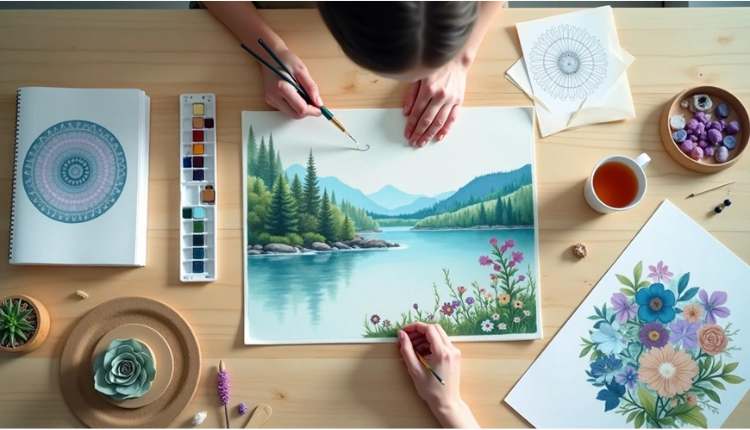
Creativity defines what makes us human, and stress-relief art often becomes exactly what we need in a hectic world. I’ve seen how artistic expression can shift someone’s emotional state—sometimes even restore it—just as it has for organizations like ArtHeart in Toronto’s Regent Park.
Research shows that creative activities lower cortisol levels and support calmer breathing, heart rate, and focus. Mandala drawing alone has proven anxiolytic effects through repetitive geometric patterns.
1. Paint by Numbers Kits by Number Artist for Guided Calm
Paint by numbers kits are a great way to find inner peace through art. Many people think they can’t make art, but these well-laid-out kits help create beautiful artwork, whatever your skill level. Number Artist makes kits that help you stay calm while you paint.
Paint by Number Kits Benefits for Inner Peace
Paint by number kits do more than just entertain you. Research shows that when you participate in this activity, your cortisol levels drop – that’s the stress hormone. The rhythm of painting creates a calming effect. You dip your brush, apply color, and watch your picture come alive.
The most important benefit of paint kits by Number Artist is that they can put you in a meditative state. Your mind clears up when you focus on filling each section with its color. Like in yoga or deep breathing, this mindfulness keeps you in the present moment.
These kits help your mental health in amazing ways:
- Stress reduction – The repetitive actions reduce anxious thoughts and help you relax
- Improved focus – Working on small sections helps your attention span grow, especially when you have attention disorders
- Enhanced cognitive function – Your brain works on problem-solving, pattern recognition, and spatial awareness
- Boosted self-esteem – A finished painting makes you feel proud of what you’ve done
Paint by numbers also helps express emotions. You can disconnect from negative feelings by focusing on creating art during tough times. Watching your artwork take shape makes you feel better and improves your emotional health.
How to Use Paint by Number Kits
Your Number Artist kit needs little prep work. You can get more enjoyment and benefits by doing this right.
Setting up your space properly: Pick a quiet, bright spot where no one will disturb you. Soft music or nature sounds can make it better. Some artists use calming scents from essential oils or candles – lavender or chamomile works great.
Starting your painting trip:
- Open all materials and check out the numbered canvas and paints
- Use darker colors first, then lighter ones to avoid smudges
- Each section needs time – rushing won’t help you relax
- Let paint dry before adding colors next to it
- Paint in short sessions instead of all at once
Take deep breaths before you start. Notice everything around you – the colors, how the brush feels, and the quiet sound of paint touching canvas.
Paint by numbers is flexible. Some artists work for 30 minutes daily, others paint more on weekends. A standard kit usually takes 24-48 hours of painting to finish. Find your own pace that helps you relax best.
The best part? You’ll learn real painting skills along the way. As you get better with the techniques, you might want to try more art on your own. Making something beautiful gives you confidence to keep being creative beyond the kit.
Weekly online lessons with stories, insights, and simple practices to expand awareness, quiet the busy mind, and break free from autopilot.
Read a Free Inner Awakening Training Lesson

2. Watercolor Journaling by Serenity Sketchbooks for Emotional Release
Watercolor journaling blends visual creativity with emotional processing in a natural way. Serenity Sketchbooks creates specialized journals that aid this therapeutic practice. Their products combine quality materials with thoughtful design elements to help you connect with your inner world.
Watercolor Journaling Benefits for Inner Peace
This practice combines traditional journaling’s reflective nature with color and form’s expressive power. Research shows that people who regularly take part in artistic activities like watercolor journaling feel more satisfied with life, happier, and more purposeful.
Your emotional well-being can benefit in several ways:
- Enhanced self-expression: You get a safe space to express complex emotions that might be hard to put into words.
- Stress reduction: Painting with watercolors can lower stress and anxiety levels while promoting relaxation.
- Emotional processing and healing: You’ll have a protected space where painful emotions can become powerful personal stories.
- Mindfulness and present-moment awareness: The flow of color and water naturally keeps your attention in the present moment.
- Improved mental health: Studies show that art therapy sessions improve mental health for 80% of participants.
This practice uses both sides of your brain, taking an all-encompassing approach to processing emotions and experiences. Colors and symbols become a spiritual language that reveals truths about your inner world and promotes emotional insight through creative expression.
Is your mind constantly filled with thoughts?
Learn simple ways to quiet mental chatter and regain inner calm.
Discover the guide: Calm Down the Nonstop Chatter of Your Mind
How to Use Watercolor Journaling
You need minimal preparation to start watercolor journaling, but you’ll get maximum therapeutic benefit. Find a quiet area with good lighting and comfortable seating, away from distractions. This becomes your sanctuary for creative exploration.
Steps to begin your practice:
- Set up your space with calming elements like natural lighting, soft music, or gentle sounds
- Take a few deep breaths to center yourself
- Start with simple techniques instead of complex scenes
- Try the primary colors background technique—use red, blue, and yellow to see how they mix on the page
- Create freely without worrying about the final result
Some techniques can make your practice even better. You might want to scribble your thoughts using watercolor crayons, markers, or watercolors to create what one practitioner calls “wonderful graffiti layers” that release feelings.
You could also try emotion mapping by picking colors that match your current emotional state—fiery reds for anger or soothing blues for peace.
Traditional approaches aren’t your only option. Some people find relief in expressing difficult emotions on the page and then adding a layer of white paint to partially hide them—a way to process and change these emotions.
3. Mandala Drawing Kits by Tranquil Patterns for Centered Focus
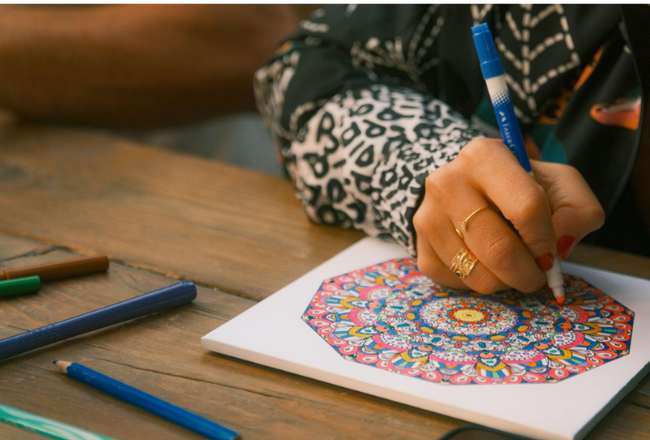
Mandala creation’s geometric precision provides a chance to practice mindfulness that is different from other art forms. Tranquil Patterns has created specialized mandala drawing kits that turn this ancient meditative art into a simple stress relief practice for anyone who wants centered focus and inner calm.
Mandala Drawing Kits Benefits for Inner Peace
Creating mandalas brings unique psychological and emotional benefits that make it work as stress relief art therapy. Drawing mandalas puts you in a meditative state by engaging both sides of your brain in focused activity.
Studies show that creating mandalas substantially reduces anxiety symptoms through repetitive geometric patterns that promote meditative focus. The process naturally guides you into mindfulness as your attention moves away from distractions toward a calm, centered awareness.
The specific benefits include:
- Improved concentration and mental clarity – Detailed mandala drawing improves cognitive skills and sharpens focus
- Stress and anxiety reduction – Rhythmic patterns create a soothing effect, promote relaxation, and lower cortisol levels
- Improved creativity – Mandalas let you explore art within a structured framework
- Emotional processing – Creating mandalas helps release negative emotions and foster positive ones
- Spiritual connection – Mandalas serve as powerful symbols of self-discovery for those on a spiritual experience
Mandala creation works especially well when you have structure combined with creativity. The geometric framework gives you a sense of order and control that reduces anxiety, while creative elements let you express and release emotions.
How to Use Mandala Drawing Kits
You need minimal preparation to create a mandala, yet it offers maximum therapeutic benefit. Here’s how to begin your practice:
- Pick a quiet, peaceful space with few distractions where you can focus on creating
- Keep all supplies in one available spot—ideally in a basket or drawer near your space
- Start with simple mindfulness activities, like looking at mandala shapes in nature (flower centers, gemstones) to train your eye
- Choose a specific time for your practice—consistency makes the therapeutic benefits better
The creation process works like this:
- Start at the center point (called the bindu), which represents unity and wholeness
- Use your compass to draw concentric circles around this center point
- Make divisions using straight lines that radiate from the center
- Fill in patterns by repeating shapes like triangles or lotus petals along these lines
- Add color last, choosing hues that match your emotional state or intention
Note that you should practice with self-compassion rather than perfectionism. Each mandala shows your emotional state at that moment—a visual snapshot of time. You can date your creations and give them titles to enhance reflection.
4. Clay Modeling Sets by Sculpey for Grounded Awareness
Clay modeling connects us to our sense of touch in a way few other art forms can, creating an experience that feels grounding, calming, and deeply present.
Sculpey, one of the most recognized clay brands in the world, offers modeling clays and creative kits widely used for mindful sculpting and stress-relief projects. Their materials are easy to work with and engage the senses fully, making them ideal for emotional balance and mental clarity.
Clay Modeling Sets Benefits for Inner Peace
Clay work provides a unique therapeutic effect because of its tactile, sensory nature. The physical contact naturally promotes mindfulness as your hands lead your attention back into the present moment.
Research shows that clay-based activities can significantly reduce anxiety. In some cases, structured clay therapy over several weeks has helped lower anxiety and somatization symptoms, mainly because clay engages both body and mind at the same time.
Clay activates both hemispheres of the brain—analytical focus through planning and spatial awareness, and emotional expression through creative movement. This combination helps regulate the nervous system and supports emotional release.
Clay modeling encourages emotional well-being by offering:
- Emotional release – Clay lets you express complex feelings without relying on words
- Stress reduction – Repetitive motions like kneading and shaping create a meditative rhythm
- Improved self-awareness – Hands-on work helps integrate emotions and physical sensations
- Enhanced focus – Concentration grows naturally as your attention stays on the material
How to Use Clay Modeling Sets
Clay modeling requires little preparation but offers substantial therapeutic impact. Pick a quiet, comfortable area and protect your workspace with a simple table covering.
To start your practice:
- Feel the clay—notice its temperature, softness, and how it reacts to pressure
- Try basic techniques such as rolling a ball, flattening shapes, or forming coils
- Allow your hands to guide you without strict expectations
- Focus on the process instead of the end result
To deepen the therapeutic effect, you can try:
- Free-form sculpting – Shape clay intuitively to release emotional tension
- Guided imagery – Visualize emotions or memories and sculpt them symbolically
- Symbolic sculpting – Create shapes that represent ideas, goals, or feelings
- Mindful modeling – Pay close attention to texture, pressure, and movement
Positive thinking can change the way you experience life.
Learn simple methods for guiding your thoughts toward optimism, confidence, and better outcomes.
Explore the guide to Discover Positive Thinking
5. Collage Art Packs by Paper Source for Gentle Self-Exploration
Collage art transforms everyday materials into meaningful visual stories. Paper Source, a well-known creative brand, offers curated papers, ephemera packs, and mixed-media materials that make collage art an accessible way to explore your inner world and support emotional wellness.
Collage Art Packs Benefits for Inner Peace
The assembling nature of collage therapy provides unique psychological benefits. It lets you express emotions visually when words fall short, creating a safe space where your inner experiences can take form.
The act of choosing images, arranging pieces, and building layers creates a bridge between your conscious mind and deeper thoughts.
Cutting, arranging, and gluing naturally pull your attention into the present moment. This hands-on process works like active meditation—quieting anxious thoughts and giving hidden emotions a chance to surface safely through imagery and creative storytelling.
Collage offers several valuable therapeutic benefits:
- Improved resilience – Experimenting with materials encourages adaptability
- Self-understanding – Patterns and themes in your work reveal personal insights
- Stress reduction – The focused activity helps calm the mind
- Emotional processing – Visual elements help transform difficult feelings in a healthy way
How to Use Collage Art Packs
Your collage practice needs minimal setup but can deliver meaningful emotional benefits. Choose a quiet environment with soft music or nature sounds to create a calming background for your creative process.
To begin your self-exploration:
- Follow your intuition and choose images that resonate emotionally
- Cut out visuals that reflect what you want to express, embrace, or release
- Arrange pieces without pressure—focus on process rather than outcome
- Consider framing certain images or layouts that reflect emotions you’ve already worked through
You can experiment with different emotional techniques as well. Extend colors beyond image boundaries to express movement, or cut shapes intentionally to reflect transitions or shifts in your emotional state.
Another powerful option is creating “mindfulness collages” focused on themes like peace, wellness, or inner clarity—simple visual sanctuaries for stressful moments.
Conclusion
Life moves quickly, and art offers a steady place to land. Creative activities can lower cortisol, improve focus, and guide you back into the present moment.
Paint by number work provides structure that removes the fear of a blank canvas.
Watercolor journaling gives room for emotion and reflection.
Mandala drawing brings meditative clarity, clay work grounds you through touch, and collage art turns everyday images into meaningful stories.
These creative paths differ, but they all help quiet the mind. You don’t need artistic skill to benefit—just the willingness to begin. One of these practices may resonate with your emotional needs right now. Your hands can shape more than materials; they can shape your inner state. When stress builds, relief might be just a brushstroke, journal page, mandala pattern, clay form, or collage away.
The Positive Thinking Course teaches practical methods for replacing negative thoughts and building a stronger, more optimistic mindset.
👉Explore the Positive Thinking Course