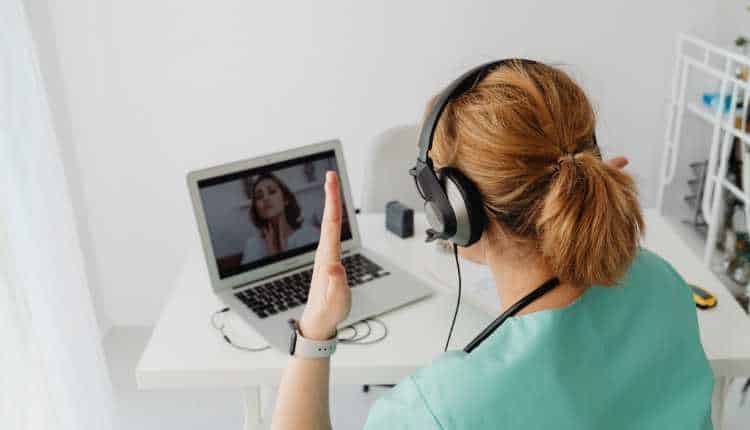
Online therapy presents itself as this super convenient way for anyone to get help with their mental health. And it can be – but only if you get the most out of it.
You see, this type of mental health “treatment” gets a bad rep at times because people don’t know how to use it properly. They may choose bad providers or approach the whole thing from the wrong angle. When handled correctly, online therapy can be just as good, if not better, than traditional in-person therapy sessions.
So, how do you ensure that you make the most out of it and avoid wasting money?
1) Choose The Right Provider
Most people go wrong in the beginning by choosing a bad online therapy provider. The worst providers all have these things in common:
- They don’t supply you with genuine therapists
- They cost a fortune
- They usually have bad reviews
Find a provider that does the opposite of all three. Look for one that employs real people – and real licensed therapists at that. Search for online therapy that takes insurance so it doesn’t cost an arm and a leg. Most importantly, look at the reviews and ask around on Reddit or other communities to see what people think about the provider.
This helps you rule out the worst options and find some suitable ones. Don’t be afraid to book a few sessions with different providers so you can work out who suits you best. There’s nothing wrong with cancelling if you think there’s a better therapist out there.
2) Focus On Long-Term Outcomes
Stop treating online therapy like a one-time solution to your mental health problems. The very nature of these issues means they run deep within your psyche. It’s naive to think you can book one online session and solve everything – you won’t.
Treat online therapy as a long process. It’s a journey you embark on, and it will take time to see any results or outcomes. Don’t focus on short-term gains; look ahead to the long-term results instead.
Appreciate that you need to stick with your sessions to work through your mental baggage, and this approach changes the way you react to each session. You start to believe in the treatment more and are likely to give your all.
Positive thinking can change the direction of your life.
Learn simple ways to guide your thoughts toward optimism, confidence, and better outcomes.
3) Be Honest – Say What Comes to Mind
Speaking of giving your all, some people struggle to open up during online therapy. This isn’t necessarily a problem with online therapy. It’s something people have a hard time doing across all forms of therapy.
You think you’re opening up and being honest, but are you? Do you have thoughts that creep to the front of your mind and almost leave your mouth, but you hold back at the last second?
You must remove any feelings of self-consciousness from online therapy sessions. Be honest about everything and say exactly what comes to mind, even if it embarrasses you or you think it sounds “weird.” The whole point of therapy is to unpack the inner workings of your mind so you can try to get to the bottom of things.
Funnily enough, online therapy makes it easier for you to open up because you don’t have to conduct face-to-face conversations.
If you’d rather, you can text your online therapist; some people find this more comfortable, especially if they struggle to speak certain things out loud. You’ll always feel this invisible rope holding you back if you withhold thoughts during online therapy, so get into the habit of speaking your mind.
4) Find a Comfortable Place to Hold Sessions
You’ll never see the full effects of online therapy if you don’t take it seriously and treat it with respect.
Some people will book therapy because it’s been recommended to them and they feel like they’re doing something positive. However, they slowly start seeing this as any part of their daily routine, rather than an important health appointment.
As a result, they’re carrying out text online therapy on the train to work, or having a call in the kitchen at home while the rest of their family carries on with their lives around them.
This is not the right way to go about things, as it means you’re:
- Not taking it seriously
- Less likely to open up
Treat your online therapy sessions as you would any other health appointment and make special time for them. Clear your schedule when you’ve got a booking and make sure you’re in a quiet and private place. Immediately, you’re going into every session with a better attitude, and this encourages you to take it seriously and get more out of it.
5) Actually, Take Notes & Apply Learnings
What good is online therapy if you don’t listen to what the therapist says and apply their teachings to your life? It’s borderline pointless, so get into the habit of making notes during your sessions or ask the therapist to send over some quick notes or bullet points of things for you to do between now and the next session.
Therapy is only one part of the solution to your mental health problems: you have to act upon what you learn.
If your therapist tells you to start a fitness routine, as this is something you’re missing and it sounds like it’ll benefit you, then you have to actually do that. Otherwise, you get to the next session and complain about the same things, but you’ve not even tried what the therapist suggested.
Take notes so you don’t forget the key learnings from each session, and this also gives you something to compare against later down the line. You may look at your notes from the first session after your tenth session and see so much progress, which helps you feel like online therapy is working.
Is online therapy for everyone? No – some people still might not find it useful, but you can only form that opinion if you’ve tried to get the most out of it. Apply these ideas to your next sessions and see if therapy starts agreeing with you. It could turn out to be the best thing you’ve ever done for your mental health.
Positive thinking can change the way you experience life.
Learn simple methods for guiding your thoughts toward optimism, confidence, and better outcomes.
Explore the guide to Discover Positive Thinking