
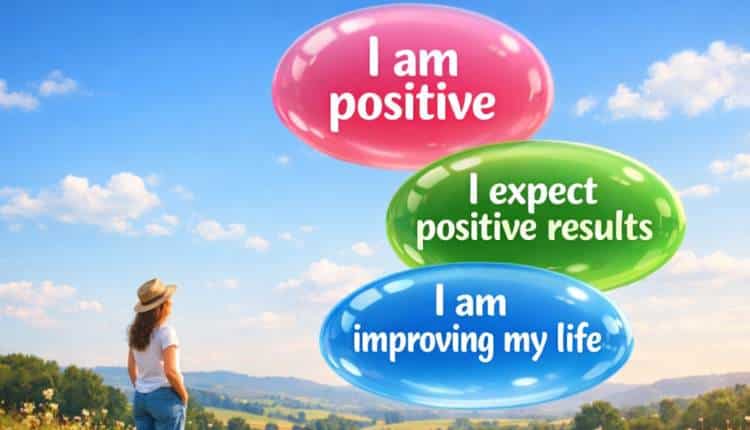
Positive thinking is one of the most misunderstood concepts in personal development. Many people imagine it as a superficial cheerfulness, a forced smile, or a refusal to acknowledge difficulties. But genuine positive thinking is none of these things.
Positive thinking is a mental discipline, a strategic mindset, and a deliberate way of interpreting reality that empowers you to move through life with confidence.
At its core, positive thinking is a positive attitude that expects the best and most favorable outcome. It is a conscious choice to focus on possibilities rather than limitations, on solutions rather than problems, and on growth rather than stagnation.
It is a mindset that shapes your emotional state, your behavior, and ultimately your results.
If you have ever wondered whether positive thinking can be realistic, grounded, and genuinely useful, this guide is meant to answer that question clearly and thoroughly.
👉 Browse our collection of articles on positive thinking.
- What Positive Thinking Really Means
- The Bright Side Principle (Seeing Possibility Without Denying Reality)
- What the Bright Side Looks Like in Real Life
- A Simple Practice: “The Bright Side Question”
- The Positive Expectation Engine (How Hope and Belief Create Momentum)
- Positive Expectation vs. Wishful Thinking
- A Practical Exercise: “Expect the Best, Prepare for Reality”
- The Benefits of Positive Thinking
- Why Positive Thinking Builds Resilience
- The Impact of Positive Thinking on Daily Decisions
- Positive Thinking and Habit Formation
- How Positive Thinking Strengthens Confidence
- The Role of Positive Thinking in Stress Management
- Positive Thinking and Relationships
- Why Positive Thinking Is Especially Valuable in Uncertain Times
- Positive Thinking and Realism Can Coexist
- Why the Benefits Accumulate Slowly and Last Longer
- How Repeated Thoughts Shape Identity Over Time
- Why Positive Thinking Feels Difficult (and Why It “Doesn’t Work” for Some People)
- How to Practice Positive Thinking in Real Life (Without Forcing or Pretending)
- Affirmations and Positive Thinking: How Words Shape Mental Direction
- How to Work with Negative Thoughts (Not Fight Them)
- The Role of Language in Positive Thinking
- Common Mistakes to Avoid When Building Positive Thinking
- Integrating Positive Thinking into Daily Life
- Daily Practices to Strengthen Positive Thinking
- Positive Thinking in Difficult Times
- Positive Thinking at Work
- The Deeper Dimension: Positive Thinking and Inner Peace
- Frequently Asked Questions About Positive Thinking
What Positive Thinking Really Means
Positive thinking is a mental attitude that focuses on the constructive side of life. It does not deny reality; it interprets reality through a lens that empowers rather than weakens you.
Positive thinkers acknowledge difficulties but refuse to be defined by them. They see setbacks as temporary, challenges as opportunities to grow, and uncertainty as a space where new possibilities can emerge.
Positive thinking is a part of a broader path of mind training, inner power, and conscious living. The core idea is simple and empowering: your repetitive thoughts, mental pictures, and inner conversations shape how you feel, what you notice, what you attempt, and how you act.
When those inner patterns are negative, life feels heavy and limited even when circumstances are not as bad as they seem. When they become more positive, focused, and calm, you see opportunities more clearly, bounce back from setbacks more quickly, and feel more confident about taking the next step.
Positive thinking is not about being cheerful all the time. It is not about convincing yourself that everything is fine when it is not.
A positive thought is not chosen because it sounds pleasant. It is chosen because it is useful.
Useful thoughts:
- Reduce unnecessary mental suffering
- Encourage forward movement
- Support emotional balance
- Strengthen the ability to respond wisely
For example, consider a setback:
- “This proves I’m incapable” leads to withdrawal.
- “This shows me what needs improvement” leads to learning.
Both thoughts acknowledge difficulty. Only one builds capacity.
Positive thinking is therefore not emotional decoration. It is mental leadership: guiding the inner narrative rather than being controlled by it.
Positive thinking in one sentence: It is the habit of choosing a constructive meaning and a useful next step, while keeping a positive attitude about results.
Common Misunderstandings (What Positive Thinking Is Not)
Before going deeper, it is important to clear up some common misconceptions. Many people reject positive thinking because they misunderstand what it actually involves.
Positive thinking is not pretending that everything is fine. It is not forcing yourself to smile when you feel overwhelmed. It is not ignoring problems or avoiding difficult conversations. And it is certainly not a magical belief that good things will happen without effort.
Positive thinking recognizes negative emotions but does not allow them to dictate your actions. It sees challenges clearly but focuses on solutions rather than obstacles.
Here is a short list to clarify the distinction:
Positive Thinking Is Not:
- Denial of reality
- Emotional suppression
- Blind optimism
- Wishful thinking without action
- A quick fix or instant transformation
Positive thinking is a disciplined mental approach that helps you respond to life with strength and clarity.
👉 Explore our comprehensive course on positive thinking.
Why Positive Thinking Matters in Everyday Life
Positive thinking matters because it influences every dimension of your life. It affects how you interpret events, make decisions, relate to others, and pursue your goals.
A positive mindset gives you a strategic advantage in situations where a broad perspective, an open mind, resilience, and emotional balance are essential.
Positive thinking changes what you notice. A worried mind scans for danger and failure. A trained positive mind scans for options, solutions, and the next useful step. That shift affects how you speak, how you decide, and whether you act or delay.
When you think positively:
- You are more likely to persevere through challenges.
- You are more likely to see opportunities where others see obstacles.
- You are more likely to maintain calm under pressure, which improves your judgment and performance.
- You are more likely to build strong relationships, because people naturally gravitate toward those who radiate confidence and optimism.
Positive thinking acts as a counter-training for the mind. It helps you:
- Stay mentally strong when news, social media, or workplace stress feels overwhelming.
- Avoid getting stuck in “doom loops” of overthinking and worst-case scenarios.
- Keep believing in your goals even when results are slower than expected.
- Protect your energy and emotional balance in the middle of daily challenges.
Instead of viewing mistakes as failures, you see them as feedback. Instead of feeling defeated by setbacks, you use them as stepping stones. This growth‑oriented mindset is one of the most powerful predictors of long‑term success.
Positive Thinking Enhances the Ability to Learn from Experience
Two people can face the same situation and end up with completely different outcomes — not because of intelligence or luck, but because of mental framing.
Negative thinking narrows perception. Constructive thinking expands it.
Positive thinking works because it interrupts automatic mental habits that quietly sabotage effort.
Reading about positive thinking is inspiring — but living it changes everything.
Our Positive Thinking Course gives you a step-by-step system to reprogram your thoughts, strengthen optimism, and create the life you truly want.
Don’t just think positive — become positive.
👉Start the Positive Thinking Course
The Thought–Emotion–Action Loop
To understand how positive thinking produces tangible results, it helps to see the basic internal sequence:
- Thought – The meaning assigned to an event
- Emotion – The feeling that follows that meaning
- Action – The behavior driven by that feeling
For example:
- “I always mess things up” → discouragement → avoidance
- “I can improve with effort” → determination → practice
The external situation may be identical. The internal response is not.
Over time, repeated responses shape habits. Habits shape results.
Positive thinking works by changing the quality of response, not by guaranteeing success.
Positive Thinking Needs Action
Repeating pleasant sentences without action leads to disappointment. Real positive thinking aligns three elements:
- Thought: “I can improve this situation.”
- Emotion: A sense of hope, curiosity, or determination.
- Action: Taking concrete steps that match the new belief.
When thinking, feeling, and action work together, positive thinking becomes a force for real change, not just wishful thinking.
The Bright Side Principle (Seeing Possibility Without Denying Reality)
Looking at the bright side of life is not childish optimism. It is a trainable mental skill: the ability to notice what is still workable, hopeful, or meaningful in a situation, even when parts of it are difficult.
The bright side is not fantasy. It is the part of reality you miss when fear, frustration, or disappointment takes over your attention.
This principle matters because the mind naturally leans toward problems. When something goes wrong, attention locks onto what is missing, what might fail, or what could get worse. That reaction may have helped humans survive in dangerous environments, but in everyday life, it often becomes a habit of pessimistic scanning, always searching for what is wrong.
The Bright Side Principle does something simple but powerful:
- It acknowledges the problem.
- It refuses to let the problem become the whole story.
- It asks: Where is the constructive angle?
👉 Related: How to Be Optimistic.
What the Bright Side Looks Like in Real Life
Bright side thinking is not pretending you love a challenge. It is noticing what can still be gained.
- You face a delay → You use the time to prepare, reflect, or rest.
- You receive criticism → You extract the useful part and improve.
- You make a mistake → You treat it as feedback.
- You feel anxious → You take it as a signal to slow down and plan.
This creates a healthier inner atmosphere. It brings lightness and steadiness, not because life becomes perfect, but because your mind stops turning every difficulty into a mental burden.
A Simple Practice: “The Bright Side Question”
When you catch yourself spiraling, ask:
“What is one good angle here that helps me move forward?”
Keep it realistic. Examples:
- “This is uncomfortable, but it’s teaching me patience.”
- “This setback is showing me what needs improvement.”
- “This is not what I wanted, but I can still take a useful step.”
Positive thinking becomes stronger when bright-side thinking is practiced in small moments, not only during major crises. Over time, it trains the mind to automatically search for hope and possibility. That is how a positive attitude becomes natural.
The Positive Expectation Engine (How Hope and Belief Create Momentum)
One of the most important parts of positive thinking is expectation.
What you expect influences what you do. It affects how you prepare, how much energy you invest, how long you persist, and how you interpret results. If you expect failure, you often hesitate, hold back, or quit early. If you expect progress, you are more willing to try again, learn, and continue.
Positive expectations do not guarantee success. They mean holding a steady belief that:
- improvement is possible
- solutions can be found
- effort can produce results
- setbacks are not final
This belief changes the way you act, and your actions change outcomes.
Positive Expectation vs. Wishful Thinking
Positive expectation is grounded. It does not ignore risks or difficulties. It simply refuses to assume defeat in advance.
- Wishful thinking says: “Everything will work out without effort.”
- Positive expectation says: “Good outcomes are possible, and I will do what I can to create them.”
This is why positive thinking is not merely “mental comfort.” It is a practical force that supports discipline, courage, and persistence.
How the Expectation Engine Works
Think of positive expectation as an inner engine with four parts:
- Expect progress.
Not perfection. Not instant results. Progress. - Prepare intelligently.
Positive thinking includes planning, learning, and improving skills. - Act consistently.
Expectation without action becomes empty. Action gives expectation strength. - Adjust without discouragement.
If something fails, you correct the approach without losing hope.
This simple cycle creates momentum. Even when results are slow, positive expectation keeps the mind from collapsing into doubt and defeat.
Reading about positive thinking is inspiring — but living it changes everything.
Our Positive Thinking Course gives you a step-by-step system to reprogram your thoughts, strengthen optimism, and create the life you truly want.
Don’t just think positive — become positive.
👉Start the Positive Thinking Course
A Practical Exercise: “Expect the Best, Prepare for Reality”
Try this mental approach:
- Expect the best outcome that is realistic.
- Prepare for challenges calmly.
- Decide in advance to keep going.
For example:
- “I expect to do well in this interview.”
Then prepare, practice, and show up calmly. - “I expect to improve my health.”
Then take consistent steps and adjust without quitting.
This balance of hopeful expectation plus practical effort is the heart of mature positive thinking. It gives you optimism without naïveté, and confidence without denial.
The Benefits of Positive Thinking
Positive thinking changes life mostly through daily responses. It helps you recover faster from setbacks, stay clearer under pressure, and keep moving when motivation drops. This creates a quieter inner world and steadier behavior, two things that strongly influence health, relationships, and success.
When thinking becomes more constructive, emotional balance improves, decisions improve, and your actions become more consistent. Over time, this produces better outcomes and a better life experience.
Positive thinking creates a ripple effect across your entire life. Its benefits are physical, emotional, cognitive, social, professional, and even spiritual.
These benefits are not theoretical. They show up in small daily moments, such as recovering faster after a discouraging conversation, making a clearer decision under pressure, trying again instead of quitting, and stopping from turning minor setbacks into mental dramas.
Over time, these small shifts produce a noticeably calmer inner life and stronger results.
Physical Benefits
- Reduced stress
- More energy
Emotional Benefits
- Less anxiety and depression
- More joy and gratitude
- Faster recovery from setbacks
Social Benefits
- Better communication
- More empathy and patience
- Increased trust from others
Professional Benefits
- Better leadership
- Stronger teamwork
- Greater career satisfaction
Inner Benefits
- A sense of purpose
- Reduced mental noise
- A deeper connection to life
Why Positive Thinking Builds Resilience
Resilience is the ability to withstand difficulty without breaking down mentally or emotionally.
Positive thinking strengthens resilience because it:
- Encourages adaptive interpretation
- Reduces catastrophic thinking
- Maintains perspective during stress
- Keeps attention oriented toward solutions
When something goes wrong, the untrained mind often jumps to conclusions:
- “This ruins everything.”
- “I’ll never recover from this.”
- “This always happens to me.”
Positive thinking interrupts this pattern.
It replaces it with questions such as:
- What can I learn from this?
- What is still intact?
- What is the next constructive step?
Resilience grows not from avoiding difficulty, but from meeting difficulty without mental collapse.
The Impact of Positive Thinking on Daily Decisions
Many people underestimate how much thinking affects daily choices.
Thoughts influence:
- Whether you begin or postpone tasks
- Whether you speak up or remain silent
- Whether you persist or quit early
- Whether you approach or avoid challenges
Negative thinking often leads to hesitation and overthinking. Positive thinking supports decisiveness.
For example:
- “I’ll probably fail” leads to delay.
- “I can handle the outcome” leads to action.
Over time, these small decisions compound into very different life trajectories.
Positive Thinking and Habit Formation
Habits are not formed through willpower alone. They are formed through repeated mental framing.
If the mind consistently associates effort with discomfort, failure, or futility, habits are difficult to sustain.
Positive thinking helps by:
- Reframing effort as growth
- Viewing setbacks as feedback
- Reducing emotional resistance to repetition
For example:
- “This is exhausting and pointless” weakens habit formation.
- “This is building something valuable” strengthens it.
Positive thinking does not eliminate effort — it reduces mental resistance to effort.
How Positive Thinking Strengthens Confidence
Confidence is not arrogance or blind belief. It is the quiet sense that you can respond competently, even if outcomes are uncertain.
Positive thinking builds confidence gradually by:
- Reinforcing constructive self-talk
- Reducing internal criticism
- Reducing mental noise
- Keeping attention in the present task
- Encouraging self-trust through experience
Each time you choose a constructive thought and follow it with action, confidence grows. This happens not because you “feel confident,” but because you prove to yourself that you can respond effectively.
This form of confidence is stable and grounded.
The Role of Positive Thinking in Stress Management
Stress is not caused solely by external demands. It is amplified by interpretation.
Two people can face identical pressure with very different stress levels, depending on how they think about the situation.
Positive thinking reduces stress by:
- Limiting catastrophic assumptions
- Encouraging realistic expectations
- Reducing emotional reactivity
- Supporting calm problem-solving
This does not mean eliminating pressure. It means responding to pressure intelligently, rather than emotionally.
Positive Thinking and Relationships
Relationships are deeply influenced by interpretation.
Positive thinking improves relationships by:
- Reducing misinterpretation of others’ actions
- Encouraging empathy instead of defensiveness
- Supporting constructive communication
- Lowering emotional reactivity
For example:
- “They’re doing this on purpose” leads to conflict.
- “There may be another explanation” opens dialogue.
Positive thinking does not excuse harmful behavior. It prevents unnecessary escalation.
Why Positive Thinking Is Especially Valuable in Uncertain Times
Uncertainty is unavoidable in modern life.
Positive thinking helps people navigate uncertainty by:
- Reducing fear-driven decision-making
- Maintaining mental flexibility
- Supporting adaptability
- Encouraging preparation instead of paralysis
Rather than demanding certainty, positive thinking teaches the mind to function well without it.
This is one of its most valuable applications.
Reading about positive thinking is inspiring — but living it changes everything.
Our Positive Thinking Course gives you a step-by-step system to reprogram your thoughts, strengthen optimism, and create the life you truly want.
Don’t just think positive — become positive.
👉Start the Positive Thinking Course
Positive Thinking and Realism Can Coexist
A common fear is that positive thinking leads to unrealistic expectations.
In practice, realistic positive thinking encourages:
- Clear assessment of situations
- Honest acknowledgment of limits
- Willingness to adjust plans
- Acceptance without resignation
Rather than insisting “everything will work out,” mature positive thinking says:
- “I will respond wisely, whatever happens.”
This stance is both realistic and empowering.
Why the Benefits Accumulate Slowly and Last Longer
Positive thinking does not produce dramatic overnight changes. Its power lies in consistency.
- Each day of constructive mental direction slightly reshapes perception.
- Each week reinforces emotional balance.
- Each month strengthens habits and confidence.
Because the change is gradual, it becomes stable.
This is why practicing positive thinking over time often feels a quiet but profound shift, not a sudden transformation, but lasting improvement.
How Repeated Thoughts Shape Identity Over Time
Thoughts are not isolated events. They form patterns.
What you repeatedly think about yourself, your abilities, and your future gradually becomes your self-concept.
Over time, habitual thinking shapes:
- Confidence or self-doubt
- Emotional resilience
- Tolerance for discomfort
- Willingness to persist
- Sense of personal strength
This is why positive thinking must be practiced consistently. Its real power lies in accumulation.
Small shifts in thinking, repeated daily, reshape perception and behavior in profound ways.
Why Positive Thinking Feels Difficult (and Why It “Doesn’t Work” for Some People)
If positive thinking is so helpful, why do many people struggle with it or abandon it?
The main reason is conditioning. Most people did not choose their habitual thinking style. It developed early through experiences, environment, repeated stress, and self-talk. Over time, negative thinking becomes automatic. It feels “realistic,” while positive thinking feels unfamiliar.
Another reason is emotional intensity. When fear, anger, or frustration rise, the mind becomes reactive. In those moments, it is harder to reframe thoughts, not because positive thinking is false, but because the mind is temporarily narrowed.
A third reason is unrealistic expectations. Many people try positive thinking as if it should produce instant emotional relief. When they still feel anxious or discouraged, they assume the method failed. But positive thinking is like building physical strength: it improves through consistent practice, not through a single effort.
Common Misconceptions that Block Progress
1) “Positive thinking means ignoring reality.”
No. It means seeing reality clearly and then choosing the most constructive interpretation and the next step.
2) “If I think positively, nothing bad will happen.”
Life will still contain challenges. Positive thinking changes how you meet them—calmer, stronger, more solution-oriented.
3) “Positive thinking is pretending.”
Pretending is denying facts. Positive thinking is directing attention away from helplessness and toward response, learning, and action.
4) “Positive thinking should feel easy.”
At first, it can feel unnatural. That’s normal. You are replacing old mental habits, and habits resist change.
When practiced correctly, positive thinking does not remove difficulty. It removes unnecessary mental suffering and strengthens your ability to respond wisely. That is why it works best as a steady discipline, not a quick fix.
The Foundations of a Positive Mindset (What Makes It Real)
Positive thinking is not passive. It includes responsibility. It asks you to take ownership of your inner state, even when you cannot control circumstances.
A positive mindset rests on four foundations:
Self-awareness. You notice your thoughts instead of being carried away by them. Without awareness, there is no choice.
Responsibility for interpretation. You may not control events, but you can influence how you explain events to yourself. Different interpretations create different emotions and different actions.
Solution-focused thinking. Instead of looping in blame, regret, or worst-case scenarios, you ask: “What can I do now?” and “What is my next step?”
Optimistic expectation. You hold the belief that progress is possible and that effort matters. This is not fantasy; it is the mental fuel that makes action easier to sustain.
When these foundations work together, positive thinking becomes strong, realistic, and effective. It does not deny life’s difficulties. Instead, it helps you meet them with a steadier mind and a more hopeful attitude.
How to Practice Positive Thinking in Real Life (Without Forcing or Pretending)
Understanding positive thinking is important, but practicing it correctly is what creates change.
Many people fail not because positive thinking is ineffective, but because they try to practice it in unnatural, forced, or disconnected ways from daily life.
This section explains how to train positive thinking realistically, step by step, in ways that respect human psychology and work over time.
Start Where You Are: Awareness Before Change
The first step is noticing your thoughts, and only later replacing them.
Most negative thinking happens automatically. People are often unaware of:
- How frequently they criticize themselves
- How often they expect negative outcomes
- How quickly the mind jumps to conclusions
Before attempting to “think positively,” develop simple awareness.
A practical starting point:
- Notice your thoughts during moments of frustration, hesitation, or stress
- Do not judge them
- Do not try to change them immediately
This awareness creates mental space, and space makes choice possible. Just be aware of your thoughts, what they are, what feelings accompany them, what words you are using in your mind, encouraging or discouraging thoughts.
The Core Skill: Reframing Without Resistance
The most effective positive thinking technique is reframing.
Reframing means looking at the same situation from a more constructive angle, without denying facts.
Important rule:
Reframing must feel believable, not exaggerated.
Examples:
- Instead of “This is terrible,” try “This is uncomfortable, but manageable.”
- Instead of “I’ll never succeed,” try “I’m still learning.”
- Instead of “I can’t handle this,” try “I can take one step.”
The goal is not emotional excitement. The goal is mental steadiness.
In this way, you replace your negative thoughts with positive ones.
Why Gentle Thoughts Work Better Than Extreme Positivity
Many people try to jump from negative thoughts directly to highly positive ones.
This often backfires.
For example:
- “I’m terrible at this” → “I’m amazing at everything”
The mind resists what it cannot accept.
A better approach is incremental improvement:
- “I’m terrible at this” → “I can improve with practice”
Progressive thoughts are:
- Easier to accept
- More stable
- More effective over time
Positive thinking works best when it feels reasonable.
Using Inner Dialogue Wisely
Everyone has an inner dialogue. The question is whether it is supportive or undermining.
Begin by listening to how you speak to yourself:
- Would you speak this way to a friend?
- Would this tone encourage effort or discourage it?
Practical adjustment:
- Replace harsh inner commands with calm guidance
- Replace accusations with observations
For example:
- “You’re lazy” → “You’re tired; adjust your pace.”
- “You failed again” → “This attempt didn’t work; learn from it.”
This shift alone significantly reduces inner resistance.
The Role of Repetition (Why One-Time Effort Is Not Enough)
Positive thinking is built through repetition, not inspiration. Just as habits form through repeated behavior, mental patterns form through repeated thought.
Expecting change from a single positive thought is unrealistic.
Instead:
- Choose a small set of constructive thoughts
- Repeat them consistently
- Apply them to real situations
Over time, the mind begins to default to these patterns. This is how positive thinking becomes natural rather than forced.
Affirmations and Positive Thinking: How Words Shape Mental Direction
Affirmations are among the most practical tools for reinforcing positive thinking when used correctly.
At their core, affirmations are deliberately chosen statements that direct attention toward constructive ideas. Repeated consistently, they help counter habitual negative inner dialogue and establish new mental patterns.
Positive thinking often fails when the mind repeatedly returns to old interpretations. Affirmations help by introducing a steady, alternative message—not through force, but through familiarity.
For example:
- Instead of repeatedly thinking “I can’t handle this,”
- An affirmation such as “I respond calmly and wisely to challenges” gently redirects the mind.
Over time, repetition reduces resistance. The subconscious becomes accustomed to the new direction, making constructive thoughts easier to access in daily situations.
It is important to understand that affirmations do not work through emotional intensity or blind belief. They work through calm repetition and alignment with behavior.
Effective affirmations are:
- Realistic and believable
- Focused on direction, not fantasy
- Repeated consistently, not occasionally
Used this way, affirmations help develop a positive attitude. They help positive thinking become more natural and less forced.
Affirmations strengthen positive thinking by keeping the mind oriented toward growth, balance, and constructive response.
👉 For guidance about affirmations, read our affirmations guide.
How to Work with Negative Thoughts (Not Fight Them)
Trying to eliminate negative thoughts often strengthens them.
A better approach is non-engagement.
When a negative thought appears:
- Acknowledge it
- Do not argue with it
- Do not follow it
Then redirect attention to something constructive.
Think of negative thoughts as mental noise, not commands. This attitude weakens their influence over time.
The Role of Language in Positive Thinking
Words matter because they shape interpretation.
Notice the language you use:
- “Always,” “never,” “ruined,” “impossible.”
These words exaggerate reality.
Replace them with:
- “Sometimes,” “not yet,” “challenging,” “possible.”
This simple shift reduces emotional intensity and increases clarity.
Common Mistakes to Avoid When Building Positive Thinking
Mistake 1: Forcing Positivity
Sometimes, trying to feel positive creates resistance and a lack of belief.
Aim for calm focus, not excitement. Don’t try to force positive thinking. When resistance arises, observe calmly without fighting it.
Mistake 2: Expecting Immediate Results
Mental conditioning takes time.
Progress may be subtle at first — but it accumulates.
Mistake 3: Using Positive Thinking as Escape
Positive thinking is meant to support action, not replace it.
Integrating Positive Thinking into Daily Life
Positive thinking becomes sustainable when integrated into:
- Work decisions
- Relationships
- Health habits
- Personal challenges
- Studying
- Daily life
Ask regularly:
- What is the most constructive way to think about this right now?
This question alone can transform daily experience.
Tell yourself regularly:
- I can do it
- I am able
- There is a solution
- I can succeed
Daily Practices to Strengthen Positive Thinking
Positive thinking becomes natural when it becomes habitual. The following practices help integrate positive thinking into daily life in ways that feel authentic and sustainable.
Morning Practices
Start your day with intention. A few minutes of gratitude, visualization, or positive self‑talk can set the tone for the entire day.
Midday Practices
Pause periodically to check in with your mind. Notice whether your thoughts are constructive or draining. This simple awareness can interrupt negative patterns before they escalate.
Evening Practices
Reflect on what went well, what you learned, and what you appreciate. This reinforces positive thinking and strengthens emotional resilience.
Weekly Practices
Review your goals, declutter your mental and physical space, and spend time with positive people. These habits build an environment of optimism and positivity.
Positive Thinking in Difficult Times
The true test of positive thinking is adversity. When life becomes difficult, the mind naturally gravitates toward fear and negativity. But this is precisely when positive thinking becomes most valuable.
Positive thinking in difficult times is not about pretending everything is fine. It is about maintaining clarity, emotional balance, and perspective. It is about responding to challenges with strength rather than panic.
Here are a few principles that help you stay positive during hard times:
• Accept reality without resistance
• Break challenges into manageable steps
• Observe emotions without being consumed by them
• Seek meaning in the experience
• Stay connected to supportive people
Positive thinking does not eliminate hardship; it helps you handle it with strength.
Real‑Life Examples of Positive Thinking
Stories make concepts real. Here are a few examples that illustrate the power of positive thinking.
Turning Job Loss into Opportunity
Someone loses a job unexpectedly. Instead of spiraling into despair, they use the moment to reassess their direction, learn new skills, and eventually find a better opportunity.
Reinventing a Business
An entrepreneur faces economic uncertainty. Instead of panicking, they innovate, adapt, and shift their business model. The crisis becomes a catalyst for growth.
Thomas Edison’s Calm in Crisis
When Edison’s laboratory burned down, he responded with calm acceptance and renewed determination. His positive mindset allowed him to rebuild and continue innovating.
These examples show that positive thinking is not theoretical, but practical and powerful.
Positive Thinking at Work
In the workplace, positive thinking is a professional superpower. It enhances productivity, strengthens teamwork, and improves leadership.
A positive thinker approaches tasks with enthusiasm and confidence. They are more likely to take initiative, solve problems creatively, and maintain composure under pressure. This makes them valuable contributors and effective leaders.
Positive thinking also improves communication. When you approach colleagues with openness and respect, you build trust and cooperation. This creates a healthier work environment and leads to better outcomes for everyone.
The Deeper Dimension: Positive Thinking and Inner Peace
Beyond success and achievement, positive thinking leads to inner peace. When you train your mind to focus on what is constructive, you reduce mental noise and emotional turbulence. You become less reactive, more centered, and more aligned with your values.
Inner peace is not the absence of problems. Inner peace is the presence of clarity. Positive thinking helps you cultivate this clarity by shifting your attention away from fear and toward possibility.
This deeper dimension of positive thinking is often overlooked, but it is one of its most profound benefits. It allows you to live with greater ease, purpose, and inner satisfaction.
Frequently Asked Questions About Positive Thinking
Does positive thinking mean ignoring reality?
No. It means responding to reality with common sense, courage, and faith in yourself.
Can positive thinking eliminate problems?
No, but it puts you in a better position to handle them.
Is positive thinking the same as affirmations?
Affirmations are a tool that helps express positive thinking.
How long does it take to see results?
Small changes often appear within weeks. Deeper changes may take months of consistency.
Can positive thinking help during difficult time
Yes, especially when things are difficult, this attitude can brighten your mood, ease the situation, and help plan, act, and move forward.
👉 Browse our collection of articles on positive thinking.
Final Thoughts: Positive Thinking as a Lifelong Practice
Positive thinking is not a quick fix or a temporary mood booster. It is a lifelong practice, a way of relating to yourself, others, and the world. It empowers you to handle challenges with resilience, pursue goals with confidence, and live with greater purpose.
Every moment offers a choice: to think in ways that weaken you or in ways that strengthen you. Positive thinking is the choice to strengthen yourself, to expect the best, and to create the conditions for the best to unfold.
This guide explains the principles. Structured training requires consistent practice, which we cover in our course on positive thinking.
Reading about positive thinking is inspiring — but living it changes everything.
Our Positive Thinking Course gives you a step-by-step system to reprogram your thoughts, strengthen optimism, and create the life you truly want.
Don’t just think positive — become positive.
👉Start the Positive Thinking Course
Refined and updated with practical wisdom for 2026 by Remez Sasson.
About the Author - Remez Sasson
 Founder of SuccessConsciousness.com, Remez Sasson has spent decades studying, practicing, and teaching inner development, meditation, focus, and conscious living. Through articles, books, courses, and ongoing weekly lessons, he offers practical guidance or cultivating inner calm, greater awareness in everyday life, and ways to improve one's life.