

Quick Answer
Inner peace is the inner state of mental stillness, emotional balance, and awareness that isn’t shaken by thoughts, worries, or external events. It gives you clarity, stability, and the ability to respond to life calmly rather than react automatically.
Anyone can train themselves to experience inner peace through small daily practices like letting go, slow breathing, and conscious attention.
Weekly lessons to open your mind and expand your awareness. A short story paired with insights and a practical exercise, designed to move you beyond the walls of habit and belief to a wider, freer way of seeing life.
**READ A FREE LESSON**
Inner peace is more than calm. It’s a steady state of harmony between mind, heart, and life, even amid challenges. In this article, you’ll discover what true inner peace looks like, how to untangle mental clutter, and practical steps to live with balance, clarity, and emotional resilience.
Inner peace is a calm and balanced state of mind that remains steady through life’s ups and downs. It means being centered, free from constant worry, and at ease with yourself and the world. True inner peace comes from awareness, acceptance, and living with clarity and purpose.
“Learn to be calm, and you will always be happy.”
– Paramahansa Yogananda
I have written many articles about inner peace and explained its meaning since most people don’t know what it really means.
Some time ago, I received an email from a reader. In it, she wrote that she doesn’t want inner peace because she wants to be active and alive.
She was afraid that calmness might make her passive and take all the fun from her life. She also said that she preferred to keep her mind restless and very active, not calm.
This way of thinking shows a lack of understanding of what inner peace is.
Inner peace is not a state of passivity and would certainly not make life dull. On the contrary, it will make you more conscious, alive, and happy. It would help you live life more fully.
Key Takeaways
• Inner peace is a mental skill, not a personality trait.
• You can train it with simple, short exercises.
• It improves focus, decision-making, confidence, and emotional freedom.
👉 Read our comprehensive guide on inner peace.
Download this free 3-step guide and start building focus and inner calm in just 5 minutes a day.
**Download the Free Guide**
What Is Inner Peace?
What does inner peace mean, and how can we define it?
It is a state of emotional and mental peace and calmness. It means being at peace with yourself and the world and enjoying inner harmony and balance.
Screens, notifications, and constant noise are quietly draining your focus and inner peace. This course shows you how to reclaim your mind, restore your calm, and live more consciously in a hyperconnected world.
Explore the Course
Here is how Wikipedia defines it:
“Inner peace, or peace of mind, refers to a state of being mentally and spiritually at peace, with enough knowledge and understanding to keep oneself strong in the face of discord or stress. Being ‘at peace’ is considered by many to be healthy and the opposite of being stressed or anxious.”
Here are a few more definitions of inner peace:
- Inner peace means that there is no overthinking and too much analyzing of every situation.
- It is a state of psychological or spiritual calm despite the potential presence of stressors.
- Being always peaceful refers to a deliberate state of peace, happiness, and contentment in everyday life.
- It means no running from one thought to another, constantly ruminating about some past incident, no constant dwelling on hurts and what people said or did.
- Inner peace means tranquility, poise, serenity, and quietness.
The Benefits of Inner Peace in Daily Life
Inner peace improves nearly every part of your daily experience. When your mind is calm, you think more clearly, make better decisions, and respond to situations instead of reacting emotionally. It reduces unnecessary worry, lowers mental tension, and helps you stay stable even when life feels uncertain.
Inner peace also increases focus, strengthens patience, and makes you more present with the people around you.
Tasks become easier, conversations become smoother, and challenges feel less overwhelming. With inner peace, you live with more confidence and emotional freedom.
What Inner Peace Is NOT
Inner peace is often misunderstood. It is not a passive or weak state, and it does not mean withdrawing from life or avoiding responsibilities. It does not mean you stop caring, lose ambition, or become emotionless.
Inner peace is also not pretending everything is fine when it isn’t. It doesn’t require suppressing feelings or forcing yourself to “stay positive.” And it is not the same as escape, such as scrolling, distraction, or numbing yourself.
Real inner peace is inner strength. It allows you to face life with calmness instead of tension, clarity instead of confusion, and awareness instead of automatic reactions.
How to Develop Inner Peace (5 Practical Steps)
1. Pause and Breathe Slowly
A few slow, deep breaths calm the nervous system and quiet the mind. Do this several times a day for 20–30 seconds to create inner stability during stressful moments.
2. Practice Letting Go of Small Things
Don’t engage every thought, worry, or irritation. When something minor bothers you, acknowledge it and gently release it. This simple habit prevents mental tension from building.
3. Focus on One Thing at a Time
Multitasking creates inner noise. Choose a single task, stay with it, and complete it before moving on. This strengthens attention and reduces inner agitation.
4. Create Moments of Stillness
Sit quietly for one or two minutes without phone or noise. Look around, breathe, and simply “be.” These micro-moments of stillness accumulate and gradually deepen inner peace.
5. Use Your Awareness, Not Willpower
Instead of forcing yourself to be calm, observe how your mind behaves. Awareness naturally softens inner pressure and creates space. When you observe instead of react, peace becomes easier and more natural.
The mind is like a room crammed with a lot of stuff. When you empty it of meaningless and restless thoughts, fears, and worries, what remains is a peaceful space.
Unclutter Your Mind
Suppose your room is crammed with furniture, books, papers, and a lot of junk. There is no free space, and you can hardly move in the room.
After living in this room for some time, you get used to it, no matter how uncomfortable and unpleasant it is. You might dislike it sometimes but do nothing to clean or rearrange your room.
This is exactly the state of your mind. It’s crammed with thoughts, fears, worries, and endless thinking. There is no room for new, different thoughts. It is in a state of tension and stress, constantly jumping from one thought to another, like a butterfly hopping from one flower to another.
Imagine that one day you decide to clean your room.
You take everything out of your room, emptying it completely. Now the room seems very big without all the stuff in it.
You clean and wash it, and then put back only the essential stuff. How do you feel now when you are in your room? Isn’t there an exhilarating feeling of joy? There is a lot of space, and you can move freely and find everything easily.
Suddenly, you realize that you live in a big room, and this gives you a great feeling of joy and power. You realize that you have been living in a limited and cramped environment. Now, there is more air and more space, and you can move and walk freely in the room.
Did you lose anything of importance in this process?
No, you lost absolutely nothing. You only gained a lot.
It is the same with your mind. When you empty it of unnecessary thoughts, fears, and worries, it becomes free, and you enjoy a sense of inner peace.
You need to stop cramming your mind with unnecessary thoughts, which limit you and waste your time and energy. You need to unclutter your mind.
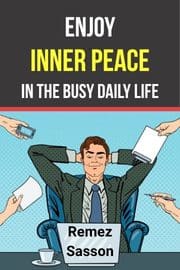
Do Stress, Worries, and Other People's Behavior Rob You Of Your Peace Of Mind?
Inner peace is not reserved for monks — it is a skill anyone can develop. Learn practical techniques to release stress, stop dwelling on the past, and stay calm and composed in everyday life.
Discover the Book →Inner Peace Appears when You Empty Your Mind
Inner peace is like a clean and spacious room, empty of unnecessary, old, or broken stuff.
After emptying your mind of unnecessary and negative thoughts, it will be filled with happiness and inner peace. How do you get these results? You can get them by practicing meditation.
You become more alive when you remove all the unnecessary and useless stuff from your mind. The negative and meaningless thoughts would be gone, and you begin to see everything more clearly like you never did before. It is like taking away a curtain that distorted your vision.
When the mind calms down there is mental calmness, emotional equilibrium, optimism, and mindfulness. This of course affects the physical health in positive way.
I hope that these words made it a little clearer what inner peace is and how to be peaceful. You can find practical steps in the other articles on this website, as weel as in my books.
10-lesson course teaching you how to step into a vast inner dimension of calmness, freedom, and creativity.
👉 Discover The Art of Inner Space
Resources and Quotes about Inner Peace
If you are interested in reading more articles about inner peace and learning how to find it, you might like reading the other articles I have written about this topic.
If you wish to achieve inner peace and enjoy it in daily life, I highly recommend reading my book on this topic.
When the restless activity of your mind slows down and thoughts stop rushing like waves on a windy day, then you will start getting glimpses of the sweet taste of inner peace.
“The life of inner peace, being harmonious and without stress, is the easiest type of existence.”
“First, keep the peace within yourself, then you can also bring peace to others.”
Frequently Asked Questions on Inner Peace
What Is Inner Peace?
Inner peace is a state of mental and emotional calmness, free from excessive thoughts, worries, and over analysis. It involves being at peace with oneself and the world, leading to inner harmony and balance.
This tranquility builds a deeper connection to one’s consciousness and supports spiritual growth.
What Causes Inner Turmoil?
Inner turmoil often arises from overthinking, constant rumination on past events, and dwelling on fears or regrets. Such mental clutter disrupts emotional balance and hinders the experience of inner peace.
Can Anyone Develop Inner Peace?
Yes, anyone can cultivate inner peace through practices like meditation, mindfulness, and concentration exercises. One can achieve a peaceful mental state by consistently training the mind to focus.
Is Inner Peace the Same as Passivity?
No, inner peace is not about being passive or indifferent. Instead, it enables you to engage with life more fully, responding to situations with clarity and calmness rather than reacting impulsively.
How Does Inner Peace Relate to Spiritual Growth?
Inner peace creates a quiet mental environment that allows for deeper self-awareness and connection to one’s inner self.
This clarity and stillness are essential for spiritual development, as they open the path to higher consciousness and understanding.
What Are the Practical Steps?
Meditation: Regular practice helps calm the mind and reduce overthinking.
Join The Path to Awakening — A practical online meditation course that guides you step by step to inner peace, heightened awareness, and awakening beyond daily distractions.
👉Explore The Online Meditation Course
Mindfulness: Being present in the moment prevents dwelling on past or future worries.
Concentration exercises: Training the mind to focus enhances mental clarity.
Letting go of unnecessary thoughts: Recognizing and releasing unhelpful thoughts leads to mental tranquility.
Image source – DepositPhotos
Do Stress, Worries, and Other People's Behavior Rob You Of Your Peace Of Mind?
Inner peace is not reserved for monks — it is a skill anyone can develop. Learn practical techniques to release stress, stop dwelling on the past, and stay calm and composed in everyday life.
Discover the Book →Refined and updated with practical wisdom for 2026 by Remez Sasson.
If you find this content helpful, we would truly appreciate it if you mention or link to SuccessConsciousness.com.
About the Author
 Remez Sasson is the founder of SuccessConsciousness.com, a global resource established in 2001. With decades of personal experience and 25 years of professional digital publishing he has written many articles, and created 11 eBooks, and 16 digital courses. His teachings have helped readers worldwide cultivate inner peace, self-mastery, and inner strength, empowering them to effectively shape their lives.