

The title of this article is based on the words of Lao Tzu, who said, “The journey of a thousand miles begins with one step.”
This is one of the most famous quotes attributed to Lao Tzu, and it holds a profound truth.
This is true not only for a long journey of thousands of miles but also for a short one. In this article, I am not referring to actual journeys or trips but to goals, tasks, and actions. I am referring to everything that requires you to take the first step.
Stop living on autopilot. Get a weekly lesson delivered to your inbox to help you break free from automatic thinking, expand your awareness, and see everyday life from a broader, more practical perspective.
**$9/month — Cancel anytime**
**START YOUR WEEKLY LESSONS NOW**
Even the simple action of drinking water from the tap requires walking to the kitchen, opening the tap, and filling the glass with water. If taking the first step is essential for such a simple act of filling a glass with water, it is also vital for achieving any goal, small or big.
If you wait for things to happen, they will probably never happen. You have to take the initiative and act. You need to take the first step, and then the other steps will follow.
Take the First Step of the Journey
Lao Tzu was right when he said, “The journey of a thousand miles begins with one step.” You cannot reach anywhere without taking the first step.
- Do you wish to use creative visualization and manifestation to achieve your goals and improve your life? You need to start visualizing. This is the first practical step.
- Do you want to change a certain habit? You have to take action.
- Are you interested in learning meditation and making it a part of your life? If so, you need to learn to meditate. Without this step, you will get nowhere.
- Do you need a job? You have to start looking for it.
- Do you want to be rich? You have to start making plans and carry them out.
- Are you keen on achieving success in sports? You need to train your body.
- Do you want to own a business? You need to take the proper steps.
Waiting and doing nothing will not create success or help you achieve your goals, tasks, or chores. You need to act. You need to move toward your goal and not wait for the right time, the right circumstances, or the right mood.
A Journey of a Thousand Miles vs Taking Just a Few Steps
A journey of a thousand miles or one of just a short distance requires taking the first step.

Are You Focused on What You Don't Want Instead of What You Do?
Learn how to use creative visualization, the law of attraction, and the power of your mind to stop drifting and start deliberately creating the life, success, and abundance you truly want.
Discover the Book →Often, laziness and inner resistance prevent you from taking the first step. Once you take one step in the direction of your goal, the second step will follow. However, you have to take the first one.
You need to start carrying out what you want or need to do, whether it is sweeping the floor, going to the store to buy milk or bread, learning a new language, finding a new job, starting a business, or becoming a writer. The first step is always important.
Once you make the first step, you gain confidence and your motivation to succeed will grow. It would then be easier to overcome laziness and inner resistance.
It is pleasant to daydream, but to make your daydreams come true, you have to start walking in their direction. You have to take action.
You have to take the first step, and then the second, the third, and all the steps that separate you from your goal. This is valid for every goal, small or big, relating to your job, health, finance, self improvement or spirituality.
Screens, notifications, and constant noise are quietly draining your focus and inner peace. This course shows you how to reclaim your mind, restore your calm, and live more consciously in a hyperconnected world.
Explore the Course
Remember the words of Lao Tzu, “The journey of a thousand miles begins with one step”, and act accordingly. Also, remember that not only a long journey begins with one step, the first step, but also a short one too.
The Importance of Taking the First Step
Lao Tzu’s quote, “The journey of a thousand miles begins with one step,” highlights the importance of taking action, no matter how small, to embark on a significant journey or achieve a great goal.
Often, people are overwhelmed by the magnitude of their ambitions, which can lead to hesitation or procrastination. However, Lao Tzu reminds us that every large endeavor is simply the sum of smaller, manageable steps.
By focusing on taking that first step, we create momentum and begin to chip away at what once seemed impossible. It’s a reminder that progress, no matter how gradual, is still progress.
This quote also emphasizes the power of starting, even in the face of uncertainty or fear. It teaches that while the full path might not be clear, taking the first step is the catalyst that sets everything in motion.
Success is rarely immediate, but every action brings you closer to your goal. By making that initial move, no matter how modest, you engage with the process of growth and learning, which ultimately makes the journey more meaningful and fulfilling.
Recommended reading:
Lao Tzu Quotes
Do you feel you need to increase your inner strength to be able to take the first step? Read our book Build Up Strong Willpower and Self Discipline.

Does Your Mind Jump From One Thing to Another, Making It Hard to Get Things Done?
Focus is a skill you can train. Learn practical techniques and exercises to sharpen your attention, resist distractions, and get more done — in any area of your life.
Discover the Book →Refined and updated with practical wisdom for 2026 by Remez Sasson.
If you find this content helpful, we would truly appreciate it if you mention or link to SuccessConsciousness.com.
About the Author
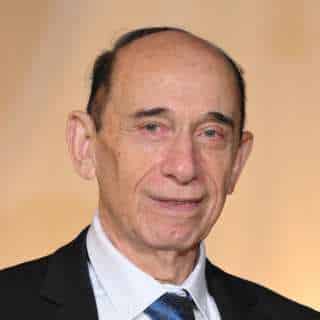 Remez Sasson is the founder of SuccessConsciousness.com, a global resource established in 2001. With decades of personal experience and 25 years of professional digital publishing he has written many articles, and created 11 eBooks, and 16 digital courses. His teachings have helped readers worldwide cultivate inner peace, self-mastery, and inner strength, empowering them to effectively shape their lives.